|
http://glass-strand.com/prod01.htm
DIRECT MELT FURNACE
|


 |
eng |
||
Thermal Images of Buildings and Equipment
با این تجهیزات قادر خواهیم بود تا درزهای احتمالی باز شده در زیر ایزوله ها را یافته و نسبت به مسدود نمودن آنها اقدام نماییم عدم رسیدگی به موقع به درزهای باز شده توسط شعله میتواند خسارت جبران ناپذیری به کوره های شیشه و سیمان وارد نماید.یا محل های پرت حرارتی را شناسایی و مسدود کنیم.
The versatile choice for maintenance and production engineers and technicians

Our Company uses one of the latest models of Fluke, an American
company - Ti45. It is a state of the art device, which features
everything for virtually every thermography task. With a 160 x 120
detector and temperature sensitivity down to 0.1°C, the device delivers
high resolution images where even the smallest temperature differences
can be seen. The temperature range is exceptionally wide: -20 to 1200
°C and is divided into the following four ranges:
1. -20 to 100 °C
2. -20 to 350 °C
3. 250 to 600 °C
4. 500 to 1200 °C
A full spectrum of visible light image with a resolution of 1280x1024 pixels is captured simultaneously with the infrared image. This not only makes identification of details easier but also allows the use of different viewing modes e.g. picture-in-picture, alpha/auto blending etc., based on conditions or customer requirements.
This makes the model suitable for the following applications:
Process Monitoring: Real-time process monitoring thanks to regular measuring (weekly, monthly, quarterly) in order to ensure safety and verify that technologies function properly. Comparative measuring provides output data that is important e.g. for a cooling system set-up of various thermal plants based on their wear, electrical equipment checks etc.
Preventive Maintenance: Identification of mechanical and electric faults and problems, which can prevent a state of disrepair. Single measuring does not provide as accurate information about a running process as regular measuring, however it still enables identification of critical places and problem detection relatively early on, thus reducing associated repair costs.
Quality Control: Checking whether repairs or adjustments have been performed correctly.
Building Thermal Performance Assessment: Assessment of buildings' thermal performance. Verification of insulation quality in houses or blocks of flats, detection of heat leakage in industrial halls etc.
Upon measuring, every customer receives a report containing infrared and visible light images, applied ranges, coefficient values, temperature figures, measuring conditions etc. Due to the fact that every object requires a different approach during measuring, we shall be happy to provide you with more information on measuring options and advantages this service could give you, in the form of consultation.
FLUKE Ti40 Ti45 IR FlexCam©

The Fluke Ti4x models feature everything needed for virtually every thermography task. With a 160 x 120 detector and temperature sensitivity down to 0.08°C (NETD) they deliver high resolution images where even the smallest temperature differences can be seen. The units are extremely easy to use through the Windows® CE menu structure and offer an extended troubleshooting feature set to allow on the spot analysis in the field.
More information can be downloaded in pdf format.
Example of a Thermal Image


Picture Information: an Image with visible emissivity
Emissivity: 0,95
Background ~34,7 °C
Calibrated Temperature Range 250,0 °C to 600,0 °C
Image Temperature Range ~44,1 °C to 503,3 °C
Image Date / Time: 20.2.2008 14:18:55
A steel construction of a melting plant


Completion of the plant construction


Glass and Other Industrial Furnaces
Complete restoration of a melting plant


Suspended Refractories
Our suspended refractory designs are known for their robust construction and durability. We have designs ranging from 1.5 meters to 13.7 meters.
The most widely used suspended refractory is the suspended backwall.
The refractory is suspended above the doghouse by means of horizontal support steel and special castings. The suspended backwall can be configured with a wide variety of nose designs or angles from 15° - 90°. The angle on the backwall nose allows for fritting (pre-melting) in the doghouse area.
Suspended backwalls are used extensively in conjunction with blanket batch chargers due to the typically large width of the doghouse. A suspended backwall can be designed to span even the longest distances, such as those used on large float furnaces.
The refractory tiles are supported by horizontal beams and castings which are designed to move with the refractory during heat-up. This prevents any binding or unnecessary pressure between the refractories during expansion.
Our backwall tiles are fully interlocking on all four sides. This increases the integrity of the wall. In the event that a tile would break loose from a casting, it is still secured by the interlocks on all four sides.
Oxy-fuel fired funaces can suffer from increased refractory erosion through alkalai attack. Frazier-Simplex has addressed this problem in our new suspended backwall designed specifically for the higher temperature Oxy-fuel furnaces.
We have upgraded the material used in our castings to consist of high temperature stainless steel alloy. This allows us to heavily insulate the backwall without compromising the strength or integrity of the castings. This alloy will allow our castings to operate safely to 1800°F (928°C).
The Oxy-fuel insulation packages we offer range from 1/2" (13mm) thick to 2-1/2" (64mm) thick.
The Oxy-fuel suspended backwall is available in many refractory types - fused cast AZS, bonded AZS, and others.
Suspended Roofs
Our suspended refractories can also be utilized in a horizontal roof design. The advantages of this application with our designs include interlocking features of tiles and independent support of each tile; therefore the likelihood of failure and refractory contamination is greatly minimized.
The images below depict a cold top electric melter roof. This particular application has through the roof electrodes and a spreader to distribute the batch evenly on top of the glass surface. The image on the left shows the top support steel. The image on the right is rotated 180° to demonstrate the amount of penetrations through the roof that are capable with this type of design.


|
|||||
| Description | |||||
High alumina lightweight insulating refractory brick is a kind of insulation material with organic matter as ignition loss substance in order to increase the porosity of refractory, which has such advantages as high porosity, low bulk density, good insulation effect, high strength, low thermal conductivity and long lifetime. For various industrial kilns & furnace, it is an essential insulating refractory for energy saving. |

http://www.floatglasstech.com/en/
|
||||||
| Description | ||||||
| This
kind of sillimanite block can be used as inlet & outlet lintel,
flat arch, wet back tile, supporting tile for float line canal and tin
bath http://www.floatglasstech.com/en/showProduct.asp?id=14 |


|
||||||
| Description | ||||||
| It
is usually adopted in petrochemical industry, and it is also used as
high temperature interlayer between AZS and basic bricks in order to
avoid the reaction of interface at high temperature http://www.floatglasstech.com/en/showproduct.asp?id=16. |


|
|||||||
| Description | |||||||
| LXGZ-65 is mainly used in upper area of flame space or frequent thermal shock region of alkali-free or low-alkali glass, sodium-calcium glass, boron-silicate glass, lead glass and other technical glass melting furnace, such as transition region between roof silica brick and fused zirconia-corundum brick or fused zirconia-mullite brick, transition region between silica brick and magnesia brick, crown, burner, thermalcouple, peep hole, secondary layer of melter bottom and its back lining, and also used in ladle lining for metallurgical industry. |


http://www.floatglasstech.com/en/showproduct.asp?id=17
|
|||||||
| Description | |||||||
| GL-60
and GL-65 can be used in superstructure of glass furnace, regenerator
rider arch, checker, chimney brick, as well as metallurgy blast furnace http://www.floatglasstech.com/en/showproduct.asp?id=12. |


|
||||||
| Description | ||||||
| Lip
tile is applied at the most critical forming position in pattern glass
line. it contacts glass liquid directly and has important influence on
glass quality. Besides perfect appearance, lip tile must have good
performance of resistance to thermal shock and alkali erosion. Our lip
tile has been proved in advantages of short bubble expelling time, long
lifetime and high production yield http://www.floatglasstech.com/en/showproduct.asp?id=11. |


|
|||||
| Description | |||||
| This
product adopts high grade aggregate and bond with the processing of
batching, moulding and maintaining in special conditions. It is mainly
used in resistance heating tin bath roof and kiln roof with working
temperature lower than 1250 http://www.floatglasstech.com/en/showproduct.asp?id=10 |

|
||||||
| Description | ||||||
| The
insulating bottom block is the compound of fireclay bottom block and
insulating materials. This design solves the problems of complexity
structure and installing. It has the advantages of light weight, big
insulating area and easily installing etc http://www.floatglasstech.com/en/showproduct.asp?id=9. |


|
||||||
| Description | ||||||
| Using
big vibrating table and adopting special castables, the blocks are
produced with special vibrating moulding technology. The physical and
chimerical properties and appearance of the blocks have exceeded
national standards. The resistant ability to molten glass and alkali is
better than that of traditional casting or ramming process. The
products are mainly used in bottom and side of glass furnace http://www.floatglasstech.com/en/showproduct.asp?id=7. |


|
||||||
| Description | ||||||
| The
completed tin bath roof is assembled by bridge tile, support tile and
plug tile combining four side supporting structure, which increases the
stability of the whole structure. Working face adopts sintered
sillimanite and non-working face lightweight insulating brick, hangers
are heat-resistant alloy, and sidewall is lightweight insulating brick.
The advantage of this structure is that there are no vertical joints
which can avoid spot defect on glass effectively. This kind of roof
system is used in float tin bath and other kind of kiln roof where
working temperature is lower than 1300degree cantigrade http://www.floatglasstech.com/en/showproduct.asp?id=6 . |


|
|||||||
| Description | |||||||
| Adopt
high quality raw material, tin bath bottom blocks are produced with the
processing of fine batching, moulding, drying, firing, cutting,
milling, polishing, drilling, finished product drying, detecting, etc.
The dimension is accurate and the physical and chemical properties
especially the performances of resistance to hydrogen diffusion,
flaking resistance and alkali attacking resistance are perfect. There
were no any nephelines after ten years service in tin bath. This
product could be used in the whole bottom of float glass tin bath http://www.floatglasstech.com/en/showProduct.asp?id=5. |


 |
||||||||||||||||||||||||||||||||
| ENGINEERING | ||||||||||||||||||||||||||||||||
 |
||||||||||||||||||||||||||||||||
| Henry F. Teichmann, Inc.’s engineering philosophy is to utilize the best of proven equipment, materials and technology for the client’s needs and cost requirements. Our experienced staff of design engineers gives us world class status in the glass industry. We design and develop furnaces that provide our customers with the most efficient, profitable, trouble-free glass making facility possible. | ||||||||||||||||||||||||||||||||
| FURNACES | ||||||||||||||||||||||||||||||||
 |
Regenerative | |||||||||||||||||||||||||||||||
 |
||||||||||||||||||||||||||||||||
| End-Fired | ||||||||||||||||||||||||||||||||
 |
||||||||||||||||||||||||||||||||
| In 1951, we introduced our HFT Pre-Designed Package End -Fired Furnace concept to the glass industry. The range of furnace melting areas are from 152 ft2 to 1000 ft2 and are suited for melting flint, green or amber glasses with optional additions such as electric boosting and bubbling systems. The HFT designs can be adapted to producing container, roll pattern, tableware, sodium silicate and others. | ||||||||||||||||||||||||||||||||
| Cross-Fired | ||||||||||||||||||||||||||||||||
 |
||||||||||||||||||||||||||||||||
| Generally these furnaces are individually designed to produce float glass, container glass, TV glass and others. Production capacities range from 75 TPD to 750 TPD for clear and colored glasses. Electric boosting and bubbling systems can be installed to increase the furnace efficiency and improve glass quality. Designs include gas or oil firing capability. | ||||||||||||||||||||||||||||||||
 |
||||||||||||||||||||||||||||||||
 |
||||||||||||||||||||||||||||||||
| Oxy-Fuel Fired | ||||||||||||||||||||||||||||||||
 |
||||||||||||||||||||||||||||||||
| Our furnace engineers have provided furnace designs that are now operational producing float glass, container glass, fiberglass as well as other types of glass. Oxy-fuel furnaces are the perfect solution because they reduce or in some cases eliminate emissions from the glass melting process. | ||||||||||||||||||||||||||||||||
 |
||||||||||||||||||||||||||||||||
| Electric | ||||||||||||||||||||||||||||||||
|
||||||||||||||||||||||||||||||||
| All electric furnaces provide an economical and environmentally safe method of producing most types of glass. Cold top superstructure designs are suited from melting borosilicate, fluoride opal and lead glasses. | ||||||||||||||||||||||||||||||||
|
Our commitment to total quality performance, and customer satisfaction has enabled Teichmann to design, procure, construct and successfully startup the glass making process in over 40 countries worldwide http://www.hft.com/Pages/furnaces/furnaces.html | ||||||||||||||||||||||||||||||||
پیش از اینکه به شرح کامل این قسمت پرداخته شود خلاصه ایده های طراحی و مهندسی این بخش ارائه میشود. پس از بدست آوردن یک مذاب همگن و هموژن که تمامی فرایند کوره ای خود را طی نموده و آماده شکل دهی است از طریق کانالی که در آن دمپرهایی جهت کنترل مذاب وجود دارد با مقدار فلوی مشخصی وارد حمام قلع میشود. حمام قلع شامل ساختمانی با پوسته فلزی که بیش از 50 متر طول و عرضی در حدود 4 تا8 متر و ارتفاعی در حدود4 متر دارد که شامل سقف کاذبی است که از آجر نسوز در قسمت نزدیک به شیشه ساخته شده است در قسمت سقف کاذب المنتهای برقی از جنس سیلیکون کارباید وجود دارد که جهت گرم نمودن این بخش به کار میرود گاز های نتیروژن و هیدروژن از قسمت بالایی سقف کاذب وارد و از سوراخ هایی که جهت ارتباط قسمت بالایی و پایینی تعبیه شده وارد قسمت نسوز چینی شده، می گرددعلت این امر این است که این گاز ها در قسمت بالایی باعث خنک کاری قسمت هایی برقی شده و در قسمت پایین جهت ایجاد یک فشار مثبت جهت جلوگیری از ورود اکسیژن از محیط به این قسمت وارد میشود مقدار این گازها به نسبت 95% گاز نیتروژن به عنوان گاز خنثی و 5%هیدروژن جهت واکنش با ورود مولکولهایی که محتملاً از دریچه های حمام قلع قصد ورود به داخل را دارند وارد میشود در صورت افزایش مقدار هیدروژن احتمال انفجار است .مولکولهای اکسیژن در صورتی که اجازه بیابند به داخل وارد شوند باعث واکنش با قلع شده و تشکیل اکسید قلع داده و به شیشه می چسبند و شیشه را عیبدار می نمایند. حدود 100 تا 300 تن قلع به حمام قلع تزریق میشود این مقدار بستگی به بزرگی حمام قلع دارد ارتفاع قلع مذاب در حدود 7تا 11 سانتیمتر در کف حمام قلع است پس از اینکه مذاب با دمای حدود °C 1100-°C1050 وارد حمام قلع شد بروی مذاب قلع به صورت یک پیازچه پخش میشود . در مرحله بعد از طرفین حمام قلع از دستگاه هایی به نام تاپ رولر برای شکل دهی شیشه استفاده می شود که دارای یک چرخ دنده در سر خود هستند و وارد نمودن نیرو در طرفین باعث کشش شیشه میشوند که در جای خود مفصلاً توضیح داده میشود پس از شکل گیری در قسمت های انتهایی حمام قلع شیشه در حال صلب شدن است از کناره های حمام قلع کولرهایی جهت خنک کاری شیشه که آب در آنها جریان دارد به صورت متقارن وارد شده اند و در نهایت شیشه با °C 600 وارد قسمت آنیلینگ میگردد.
نمایش جریانهای جاری در مذاب یک کوره شیشه اندپورت
A recuperator is a metal type heat exchanger that is used to recover heat from exhaust gases.
Depending on system conditions, it can recover tempered air of 800℃ at
the maximum.
Compared with the regenerative heat recovery system, a recuperator is
inferior in terms of heat recovery rate. However, it has many
advantages as shown below:
- Combined use with a secondary heat recovery system such as a waste heat boiler is available
- Initial investment can be reduced.
- Recuperators do not leak preheated air, and therefore, the air-to-fuel ratio can be controlled accurately
- The installation area is small, and installation is therefore relatively free of normal layout limitations
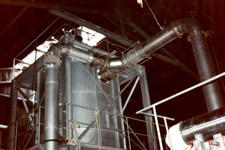
External view of a recuperator system
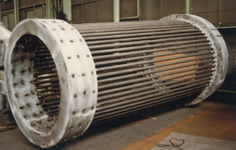
Cage type metallic heat exchanger
Heat
recovery efficiency of our recuperators is not reduced over a long
period of time, thanks to its structure that uses thermal radiation.
We have also succeeded at prolonging recuperator life by selecting special heat-resistant steel and special coating
Cullet Preheater
We design and supply cullet preheaters
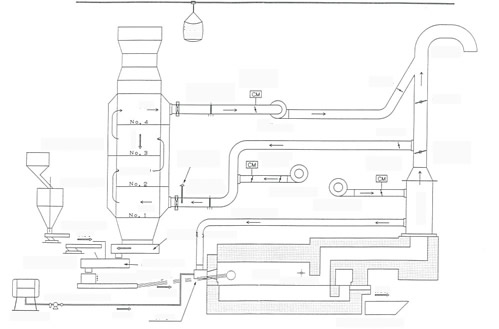
Cullet preheating flow diagram
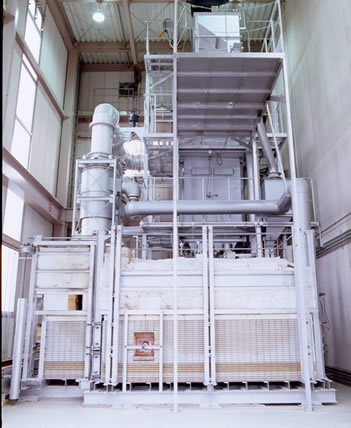
Glass melting furnace equipped with a cullet preheater
This system recovers heat by passing high-temperature exhaust gases through cullets (material) to preheat them
In a demonstration test furnace, we have succeeded at reducing fuel
consumption by 28% with this system, in comparison with the system
without cullet preheating

Benefits:
- Uniform heat radiation over a wide area
- No hot spot in front of the burner outlet
- Robust burner
- Fuel savings with hot air version
Features:
- Sizes from 150kW to 750kW
- Suitable for natural gas, LPG, manufactured gas and light oil
-
Over 10/1 turndown on ratio and 1500% excess air on natural gas
- Ignition by direct spark or premix pilot
- UV flame detection
- Maximum furnace temperature: 1350ºC
- Hot air version available for preheat temperature up to 550ºC
Typical Applications:
- Steel reheating
- Ceramics kilns
- Process heating
- Glass sheet bending

Benefits:
- Rapid and uniform heat distribution
- Robust burner with high turndown and excess air capability
- Controlled firing pattern through choice of outlet
- Fuel savings with hot air version
Features:
- Velocities in excess of 150 m/s
- Sizes from 300 kW to 9000 kW
- Suitable for natural gas, LPG, manufactured gas and light oil
- Dual fuel option available
- Over 10/1 turndown on ratio on natural gas
- High turndown inlet option for up to 5000 % excess air on natural gas
- Choice of outlet: standard refractory quarl or metallic cone: straight, cranked, T-shaped, Y-shaped
- Ignition by direct spark or premix pilot
- UV flame detection
- Maximum furnace temperature: 1600ºC
- Flame detection by single UV cell
- Hot air version available for preheat temperatures up to 600ºC
Typical Applications:
- Heat treatment
- Forging
- Reheating
- Ladle heating
- Tundish heating
- Torpedo heating
- Scrap preheating
- Stress relieving
- Crucibles
- Aluminium melting
- Thermal fluid heaters
- Thermal oxidisers
- Refractory drying units
- Glass tank heating
- Air heating
- Process heating
- Ceramic kilns

Benefits:
-
Outstanding fuel savings of up to 65%
-
Significant reductions in CO2 emission (directly proportional to fuel savings)
-
Reduced levels of NOx
-
Rapid and uniform heat distribution
-
Robust burner with high turndown and excess air capability
-
Improved productivity
-
No need for refractory-lined flues or recuperator due to low exhaust temperatures
-
Reduced exhaust filtering requirements
-
Highly fuel efficient, compact system
-
Better resistance to heat and corrosion than metallic recuperators
-
Attractive payback period
Features:
-
Heat recovery by means of fast cycling compact regenerators working in pairs
-
Typical air preheat: 85% of furnace temperature
-
Staged combustion to reduce NOx levels
-
Velocities in excess of 90 m/s
-
Sizes from 300 kW to 6000 kW
-
Suitable for natural gas, LPG, manufactured gas and light oil
-
Dual fuel option available
-
Over 10/1 turndown on ratio on natural gas
-
Over 1000 % excess air on natural gas
-
Ignition by premix pilot
-
UV flame detection
-
Maximum furnace temperature: 1500ºC
-
Exhausting by means of exhaust fan or eductor
-
Control options: modulating, high/low, on/off or pulse firing
-
Regenerators can be located under or above the burner
Typical Applications:
-
Aluminium melting
-
Heat treatment
-
Forging
-
Steel reheating
-
Strip lines
-
Ladle heating
-
Glass pots
-
High temperature air heating
-
Waste vitrification
-
Ceramic kilns
HOTWORK RECUPERATIVE BURNER (HRB)
In a furnace without heat recovery equipment operating on natural gas at 1200oC with 10% excess air, 63% of the energy input is lost in waste gases and not actually available to the process.
With typical air preheats in excess of 1/3 of the furnace operating temperature, the Hotwork Recuperative Burner has the ability to recover part of this energy by exhausting hot waste gases through its specially designed quarl and over an integral metallic heat exchanger which, in turn, preheats incoming combustion air.
This heat recovery significantly reduces the amount of fuel required for the process and makes the HRB Burner ideal for applications where flue gas temperatures are high and load residence time at high temperature is long, such as forging and heat-treatment furnaces or batch-type furnaces.


Exhausting/Furnace Pressure Control
Since the waste gases exhaust through the burner quarl, there is no need for a conventional flue, which speeds up design and installation of the furnace. The furnace pressure is controlled by an air-driven eductor in the burner flue arrangement.
Accurate pressure control is achieved by varying the volume of air to the eductor which in turn controls the amount of waste gases drawn out of the furnace. No separate fan is required for the air to the eductor as it is supplied by the combustion air fan.
Medium Velocity
The HRB burner has a medium velocity of 70 m/s which, combined with accurate furnace pressure control and careful burner configuration, ensures even temperature uniformity and excellent heat transfer to the load.
Extended Flue Version
In order to increase the residence time of waste gases exhausting through the burner and maximise the exchange of heat between the exhaust gases and the combustion air, the HRB Burners (HRB3.5 to HRB25) can be designed with an extended flue. Please note that these burners require higher combustion air and eductor air pressures. Figures are available from Hotwork Combustion Technology Ltd on request.
Turndown and Excess Air Capability
The turndown of the HRB on natural gas is 10/1 at furnace temperatures below 1200oC. Refer to the Combustion Data Table for turndown at higher temperatures. At maximum air flow and fuel only control, excess air levels better than 500% can be achieved.
Long Flame Design
For applications where extra radiation is required, a long flame design is available.
Fuels
The HRB5 and above are suitable for natural gas, LPG, gas oil (viscosity of 34 sec. Red. 1) or dual fuel arrangement. Smaller sizes are suitable for gas only.
Ignition, Flame Supervision and Automatic Start-up
The HRB Burner is ignited by means of a premix pilot with all fuels. The burner is fitted with a sight glass and a port is provided for a UV scanner to be installed. In order to start the burner automatically and supervise the flame permanently, Hotwork Combustion Technology can also supply flame management equipment if required.
Hotwork Compact Recuperator (HCR)
The heat exchanger inside the HRB Burner is available separately, known as the Hotwork Compact Recuperator, and can be used in conjunction with a hot air burner such as the High Velocity Burner (HV) or the E-Jet Ultra Low NOx Hot Air Burner (EJ_HA). Using the recuperator separately gives the possibility of positioning the burner and the exhaust at different locations, which may be required by certain firing patterns such as around a crucible furnace (burner at the bottom, recuperator at the top). It also enables features of certain burners such as the high velocity of the HV Burner to be used with higher fuel efficiency.

Fuel Savings
The fuel saving from air preheating depends on how much heat is transferred from the exhaust gases to the combustion air (directly related to the exhaust gas temperature). Experience from operating installations indicates that air preheat temperature will be about 35% of the furnace operating temperature.

Thermal ratings and Combustion data |
||||||||
|
Model |
HRB2 |
HRB3.5 |
HRB5 |
HRB10 |
HRB15 |
HRB20 |
HRB25 |
|
|
|
Thermal Rating - Max. (kW) |
57
|
103
|
146
|
293
|
440
|
586
|
733
|
|
|
Air Volume (Stoichiometric) |
57
|
99
|
142
|
283
|
425
|
566
|
708
|
|
|
Air pressure (Stoichiometric) |
37
|
62
|
37
|
70
|
70
|
62
|
62
|
|
|
Eductor Jet Air Volume |
102
|
241
|
241
|
481
|
765
|
991
|
1105
|
|
|
Eductor Jet Air Pressure (mb) |
45
|
70
|
18
|
37
|
43
|
80
|
50
|
|
Natural Gas |
Pressure @ Burner (mb) |
5
|
5
|
5
|
8
|
8
|
14
|
8
|
|
|
Max. Turndown (Stoichiometric) |
10/1
|
10/1
|
10/1
|
10/1
|
10/1
|
10/1
|
10/1
|
|
|
Furnace Temperature 1400oC |
2/1
|
2/1
|
2/1
|
2/1
|
2.5/1
|
3.3/1
|
3/1
|
|
|
Furnace Temperature 1300oC |
4/1
|
4/1
|
4/1
|
4/1
|
6/1
|
8/1
|
5/1
|
|
|
Furnace Temperature 1200oC |
8/1
|
8/1
|
8/1
|
8/1
|
8/1
|
8/1
|
8/1
|
|
|
Furnace Temperature <1200oC |
8/1
|
8/1
|
8/1
|
8/1
|
8/1
|
8/1
|
8/1
|
|
|
Max. Excess Air (%) |
500
|
500
|
500
|
500
|
500
|
500
|
500
|
|
Gas Oil |
Pressure @ burner (bar) |
-
|
-
|
2.2
|
2.4
|
2.4
|
2.2
|
2.2
|
|
|
Max Turndown (Stoichiometric) |
5/1
|
5/1
|
5/1
|
5/1
|
5/1
|
5/1
|
5/1
|
|
|
Max. Excess Air (%) |
500
|
500
|
500
|
500
|
500
|
500
|
500
|
|
|
Atomising Air Pressure (bar) |
2
|
2
|
2
|
2
|
2
|
2
|
2
|
|
|
Atomising Air vol. |
0.187
|
0.187
|
0.187
|
0.187
|
0.187
|
0.187
|
0.187
|
|
|
Max. Flame Length (mm) |
500
|
680
|
1000
|
1120
|
1350
|
1580
|
1650
|
|
|
Long Flame Burner Option (mm) |
800
|
980
|
1300
|
1420
|
1650
|
1880
|
1950
|
|
|
Max. Flame Diameter (mm) |
150
|
170
|
170
|
220
|
250
|
280
|
300
|
The data provided is for guidance only and could vary slightly due to manufacturing tolerances
* Required oil supply pressure: normally 5.5 to 6.8 bar
The data provided on this page is for information only and does not form part of any contract. Due to our continued commitment to research and development, we reserve the right to modify specifications or dimensions without notice. The improper use of combustion equipment can result in a condition hazardous to people and property. Users are urged to comply with national and local standards.
Ratio Matic : Winnox : Therm Air / Ratio Air : Vortometric : Air Heat : Linnox : AH-MA : Flue Fire.
Furnace Burners From Therm Jet high-velocity burners to Therm Thief radiant tube burners, Eclipse furnace type burners improve continuous or batch operation productivity while reducing energy costs and controlling emissions.
- Furnace Burners (Direct Fired)
Therm Jet : TJSR (Therm Jet Self - Recuperative : Furnnox : Extensojet : Therm Thief : Bayonet Recuperators : Bayonet - Ultra Recuperators : SER (Auto Recpa)
Oxygen - Fuel Burner Eclipse offers a full line of industry proven oxygen - fuel burners to the glass and other high temerature process markets.
Primefire100 : Primefire 300 : Primefire 400 : Primefire Forehearth :
Air Oil Burners fEclipse affers air-oil burners suitable for both underport and througport firing.
Series O3FA : Series GTCPA : Series WTPF.
Air - Gas Burners fEclipse air -gas burners can be used for side - of - port, underport and throughport firing.
Brightfire : 04V : WRASP : GTNG : WGD.
Immersio Burner fImmersion burners are used to hea a variety of liquids, from water to cleaning solutions to cooking oils. Since each liquid has a different heat transfer capability, it's important to apply the correct immersion eating burner technology to optimize the combustion system.: Immerso Jet : Immerso Pak : SMJ Centrifugal Blowers : Hermetic Gas Boosters.
FFlame Monitoring fEclipse offers a full line of single and multiple burner sequence controllers and relays. In addition, several flame rods, scanners and remote displays are available for use with these devices.
Shut - Off Valve fEclipse manual and automatic reset shut - off valves are designed to shut off the gas supply to a combustion system in the event of an electrical power failure or the opeing of an interlocking switch in the combustion system. All valves are UL listed, FM approved, and CSA certified.
 |
 |
 |
 |
 |
 |
 |
 |
 |
 |
 |
 |
 |
 |
|
 |
 |
|
 |
 |
 |
 |
 |
 |
 |
 |
|
 |
|
|
|
|
Immerso Pak V2.00 Replacements/Spare Parts for Configured Products.
IP 004 : 10002242-1 Flame Rod :10007506 Actuator Siemens : 10009974 Actuator Siemens : 10912 Motor Actuator : 11080 Regulator Ratio : 11132 Filter Media : 14191-1 Orifice Plate : 14191-16 Orifice Plate : 14191-19 Orifice Plate : 14191-31 Orifice Plate : 14191-5 Orifice Plate : 14191-5 Orifice Plate : 14887-13 Combustor Alloy Tube : 15273-4 Actuator : 17054 Gasket Body : 20440 Switch Air Pressure : 20475 Switch Air Pressure : 20475 Switch Differential : 20518 Motor : 20554 Motor : 20900 Zero Governor : 21057 Motor : 21472 Motor : 21495 Motor : 21631 Motor : 21727 Motor : 22735 Actuator : 22755 Actuator : 23045 : Plug Spark : 7033-2 Nozzle Machined : ACT004A1B1A1A Actuator Rotary : ACT004A2B1A1A : Actuator Rotary ACT004A3B1A1A : ACT004A4B1A1A : Actuator Rotary :
IP 005 : 10002322 Spark Plug : 10007506 Actuator Siemens : 10009974 Actuator Siemens : 10912 Motor 11132 Filter Media : 11579 : Motor : 12109 Motor : 12570 Motor : 13312-10 Flemrd : 14934-10 Orifice Plate : 14934-13 Orifice Plate : 14934-15 Orifice Plate : 14934-17 Orifice Plate : 14934-18 Orifice Plate : 14934-2 Orifice :15273-4 Actuator : 15939 Ratio Regulator : 20362-7 Orifice Plate : 204007 Combustor Alloy Tube : 20422 Mounting Gasket : 20440 Switch Air Pressure : 20475 Switch Differential : 20520 Motor : 20527 Motor : 20556 Motor : 21059 Motor : 22735 Actuator ; 22755 : Actuator : 7133-1 Nozzle Thermjet TJ050 : ACT004A1B1A1A Actuator Rotary : ACT004A2B1A1A Actuator Rotary : ATC004A3B1A1A Atctuator : ACT004A4B1A1A Actuator :
IP 006 :10002322 Spark Plug : 10007506 Actuator Siemens : 10009974 : Actuator Siemens : 10912 Motor Actuator :11080 Regulator Ratio :11132 Filter Media : 12033 Motor : 13101 Motor : 13312-9 Flmrd : 14188-26 Orifice Plate : 14188-27 Orifice Plate : 14188-27 Orifice Plate : 14188-8 Plate Orifice : 14802-11 Orifice Plate : 14188-8 Plate Orifice : 14802-11 Orifice Plate : 14932 Gasket Mounting : 15273-4 Actuator : 15939 Ratio Regulator : 19999 Ratio Regulator : 20440 Switch Air Pressure : 20475 Switch Differential : 20520 Motor : : 20528 Motor : 20556 Motor : 20859 Tube Combustor : 21059 Motor : 21473 Motor : 22735 Actuator : 22755 Actuator : 3997-1 Nozzle Machined Thermjet Size 4 Burner : ACT004A1B1A1A Actuator Rotary : ACT004A2B1A1A Actuator Rotary :
IP 008 : 10007506 Actuator Siemens : 10009974 Actuator Siemens : 10027 Gasket Mounting : 10039-5 Orifice Plate : 10912 Motor : 11128 Filter Media : 14188-19 Orifice Plate : 14188-20 Plate Orifice : 14188-23 Plate Orifice : 15273-4 Actuator : 20311 Ratio Regulator : 20312 Ratio Regulator : 20440 Switch Air Pressure : 20475 Switch Air Pressure : 22735 Actuator : 22755 Actuator : 23045 Plug Spark : 7038-1 Nozzle Thermjet TJ300 : ACT004A1B1A1A Actuator Rotary : ACT004A2B1A1A Actuator Rotary :
IP 010 : 10007506 Actuator Siemens: 10009974 Actuator Siemens : 10027 Gasket Mounting : 10039-1 Orifice Plate : 101279-1 Tube Combustion : 10315 Ratio Regulator : 10912 Motor : 11128 Filter Media : 14188-19 Orifice Plate : 14188-20 : Plate Orifice : 15273-4 Actuator : 16770 Motor : 19990 Ratio Regulator : 20360 Motor : 20440 Switch Differential : 21478 Motor : 22735 Actuator : 22755 Actuator : 23045 Plug Spark : 7038-1 Nozzle Thermjet TJ300 : ACT004A1B1A1A Actuator Rotary : ACT004A2B1A1A Actuator :
IP 012 : 10001732-1 Cone Diffuser Size 5 : 10007506 Actuator Siemens : 10009974 Actuator Siemens : 10027 Gasket Mounting : 101279-1 Tube Combustion : 10315 Ratio Regulator : 10912 Motor Actuator : 11128 Filte Media : 14188-1 Orifice Plate : 14188-4 Orifice Plate : 14188-6 Plate Orifice : 15273-4 Actuator : 16770 Motor : 19990 Ratio Regulator : 20360 Motor : 20440 Switch Air Pressure : 20475 Switch Differential : 21478 Motor : 22735 Actuator : 22755 Actuator : 22755 Actuator : 23045 Plug Spark : 7038-1 Nozzle Thermjet TJ300 : ACT004A1B1A1A Actuator Rotary : ACT004A2B1A1A Actuator Rotary :
Solenoid Valve for Air, Natural Gas, Propane & Butane110/120 V.
General Purpose Gas Shut - off Valve. L8040H7 : L8040H8 : L8040G21 : L8040G21 : L8040G22 L8214G20 L8040G23 JB821435 JB821450 JB821460 JB21470 JB821480:JB821490 : JB821440 Part No. 20167 20168 20169 20170 20171 20172 20173 20174 20175 20176 20177 20178 20179
220/240V General Purpose Gas Shut off Valves L8040H7 20167-1 : L8040H8 20168-1; L8040G21 20169-1 ; L8040G22 20170-1 ; L8214G20 20171-1 ; L8040G23 20172-1
220/240V. General Purpose Gas Shut off Valve -Continued JB821435 20173-1 ; JB821450 20174-1; JB82146020175-1 ; JB821470 20176-1 ; JB821480 20177-1 ; JB821490 20178-1 ; JB821440 20179-1
110/120V. General Purpose Gas Shut off Valve - with Visual Position Indication JB821435VI 20448 ; JB821450VI 20451 : JB82146oVI 20453 : JB821470VI 20455 : JB821480VI 20457: JB821490VI 20459 : JB821440VI 20461
110/120V. General Purpose Gas Shut off Valve - with Visual Position Indicaton and Proof of Closure Switch JB821435C 20449 ; JB821450C 20452 ; JB821460C 20454 : JB821470C 20456 : JB821480C 20458 : JB821490C 20460
220/240V. General Purpose Gas Shut off Valves - with Visual Position Indication and Proof of Closure Swith : JB821435C 20449-1 : JB821450C 20452-1 : JB821460C 20454-1 : JB821470C 20456-1: JB821480C 20458-1: JB821490C 20460-1 : JB821440C 20462-1 :
110/120 Vent Valve L8214G33 20161 : JB821453 20162 : JB821463 20163 : JB821473 20164 : JB821483 20165 : JB821493 20166
220/240 Vent Valves L8214G33 20161-1 ; JB821453 20162-1 : JB821463 20163-1 ; JB821473 20164-1 JB821483 20165-1: JB821493 20166-1
Replacement Coils 120V. 20412 20413 20414 20416 20417
Replacement Coils 240V. 20412-1 ; 20413-1; 20414-1 ; 20416-1 ; 20417-1
Ratio RegulatorsNPT : ES365 19997 ; ES366 15939 ; ES363 20312 ; ES368 10315 : ES369 10316
Ratio Regulators Rp (Metric) : ES365M 19998 ; ES366M 19999 ; ES363M 20311 : ES368M 19990 ; ES369M 19989
Ratio Regulators NPT R400Z 15685 : R500Z11080 :
Ratio Regulators Rp (Metric) R400ZM 21313 ; R500ZM 20900
Gas Pressure Regulators Model 043-B : Regulator 043B-182, 3/8 in. NPT, Cast Lron Body , 125 psi, IrV, Spring : 6- Part No. 16150-B4 : Regulator , 043B-182, 1/2 in NPT, Cast Iron Body, 125 psi, IrV, Spring : 6- Part No. 16150-B5 : Regulator , 043B-182, 3/4 in. NPT Cast Iron Body, 125 psi, IrV, Spring : 6-14 Part No. 16150-B1 : Regulator, 043B-182, 1 in. NPT, Cast Iron Body, 125 psi, rV, Spring 6-14 Part No. 16150-B3
Gas Pressure Regulator Model 143-80-2 :143-80-2, 3/4 in NPT, IrV 6-14 in. wc Spring, 3/8 in. orifice Part No. 16151-1 : 143-80-2, 1 in. NPT, IrV 6-14 in.wc Spring 3/8 in. orifice Part No. 16151-2 : 143-80-2 1.1/4 in NPT, Irv 6-14 in. wc Spring, 3/8 in. Orifice 16151-3
Gas Pressure Regulator Model 243-RPC-B : 243-Rpc-B 2 in. NPT, 1-5 psi Spring, 1.1/4 in. orifice Part No. 16152-13 : 243-Rpc-B, 2 in. Flg Spring : 1.0-5.0 psi (white) orifice : 1.1/4" Prat No. 16152-14
Gas PressureRegulator Model 243-8-1 : 243-8-1, 1.1/4 in NPT Spring : 6-14 in. wc Part No. 16152-5 : 243-8-1, 1.1/2 in. NPT spring : 6-14 in. wc (Green - Black) 16152-6: 243-8-1, 2 in NPT Spring : 6-14 in wc (Green/Black) orifice 16152-7 :
Gas Pressure Regulator Model 243-8-2 : 243-8-2, 1.1/4" in NPT, IrV Spring : 6-14 in.wc (Green-Black) Part No. 16152-8 ; 243-8-2, 1.1/2 in. NPT, IrV spring : 6-14 in.wc (Green Black) : 243-8-2 ;2 in NPT, IrV Spring : 6-14 in. wc orifice : 1/2 in Part No. 16152-10
Gas Pressure Regulators : RV12LT 17127-1 : RV20VL 15027 : RV20VL 17127-6 : R400S 17127-8 : R500S 17127-9 ; RV48L 12271 ; RV52 12274 ; RV52 12276 : RV53 12277 : RV53 12278 : RV61 12279 : RV61 12280 : RV81 12282 : RV81 12284 : RV91 12285 : RV91 12286 : RV111 12288 : RV111 12290; 325-5A 10866 ; 325-5A 10888 ; 325-5A 10897
Zero Governors : R600Z Zero Governor, 1 in. NPT, R600Z Part No. 21691 : Zero Governor , 1.1/2 in NPT. 21Odz Part No. 21692 : Zero Governor, 2 in NPT, 210ez 21693 : Zero Governor, 3 in, NPT, 210gz Part No. 21694 :
Stock Ratio Regulatior size 2" ES368M Eclipse: Ratio Regulator 1" 1PSI ES366 Eclipse; Series Locktite Shut off valve 220 V LT-IS-4 : Auti Matic
http://combustion.in.th/product%20CBT.html.: Weblog Themes By Pichak :.