به گزارش گروه وبگردی باشگاه خبرنگاران جوان، سیمرغ، ایرانی است. نامآورترین چهره اسطورهای ـ افسانهای ایرانمان که نقش مهمی در داستانهای شاهنامه دارد؛ کنامش کوه قاف است و با خرد و دانایی بیاندازهاش، رازهای نهان زیادی را آشکار میکند، زال را میپروراند و به رستم دستان در نبرد با اسفندیار رویینتن یاری میرساند.
سیمرغ، ایرانی است و همین ایرانی بودنش دلیلی بوده برای اعتراض خیلیها به ساخت تندیسهایی که در مهمترین جشنواره سینمایی کشور دست به دست میشد. تندیسهایی با پشتوانهای تاریخی که عنوان سیمرغ بلورین را یدک میکشیدند و البته از آن سوی مرزهای کشورمان به جشنواره میرسیدند؛ سیمرغهایی که در خارج از ایران ساخته میشدند. موضوعی که سال گذشته با رسانهای شدنش حاشیههای زیادی بهوجود آورد و نتیجه همه این حاشیهها حالا به یک اتفاق خوب و افتخار بزرگ برای تولیدکنندگان و هنرمندان صنایعدستی کشورمان رسیده است؛ خبرهایی که سرخطشان به تولید سیمرغهای سی و هشتمین جشنواره فیلم فجر در داخل کشور میرسد. خبری خوش که بیش از هر چیزی دل هنرمندان و افرادی را که در صنایعدستی کشورمان دستی بر آتش دارند گرم کرده است.
برچسبها: جشنواره فیلم فجر, تندیس
ادامه مطلب
نمای کلی از شیشه و بلور
قبل از کاوش اختلافات کلیدی بین بلور و شیشه، تعریف معنای آنها در فرهنگ مشهور حائز اهمیت است. برای تازه کاران، اکثر مردم از این مسئله آگاه نیستند که بلور در حقیقت به شیشه سربی اشاره می کند. در قسمت ذیل درس ترکیب شیمیایی و انواع و اقسام شیشه و بلور یافت شده در بازار مطرح می گردد.
شیشه ها
شیشه ها، ظروفی هستند که با استفاده از شیشه ساخته شده اند. از این ترم اغلب برای ظروف نوشیدنی با دسته یا بدون دسته استفاده می شود. شیشه، به عنوان یک ماده خام، معمولاً به آهک سوددار اشاره می کند که بیش از 90 درصد از کل شیشه امروزه تولید شده را تشکیل می دهد. در قسمت ذیل ترکیب شیمیایی انواع و اقسام شیشه ها به طور خلاصه مطرح می گردد.
شیشه آهک سوددار
شیشه آهک سوددار از آهک، سودا و سیلیکا تشکیل شده است. این عمومی ترین نوع شیشه برای چراغ های برق، پنجره ها، لوازم میز و سفره، و مجسمه های سفالی رنگی کوچک می باشد. از آنجایی که اجزایش به راحتی در طبیعت یافت می شوند، در نتیجه ارزان ترین ماده نیز به شمار می رود.
شیشه بوروسیلیکات
شیشه بوروسیلیکات یا پیرکس از سیلیکا، اسید بوریک، سودا و مواد افزودنی دیگر تشکیل شده است. این نوع شیشه اغلب در آزمایشگاه و آشپزخانه بکار برده می شود، زیرا در برابر گرما و خوردگی مقاوم می باشد.
کوارتز ذوب شده
شیشه کوارتز ذوب شده از ذوب بلورهای کوارتز آلی در دماهای بالا ساخته شده است. ازاین نوع شیشه، به طور نمونه برای تجهیزات آزمایشگاهی، لامپ های هالوژن، و دوربین های پیشرفته استفاده می شود.
بلور
زمانی که اکثر مردم در مورد بیرون آوردن بلور صحبت می کنند، اغلب به نوعی شیشه اشاره می کنند که از جنس سیلیکا، اکسید سرب، سودا یا پتاس و سایر مواد افزودنی می باشد. بلور سرب به خاطر دوامش و خصوصیات تزئینی اش بسیار باارزش می باشد، حتی اگر الزاماً دارای ساختار بلوری نباشد. به این دلیل بلور نامیده می شود که سالها قبل، از کلمه ایتالیایی CRISTALLO برای اشاره به بدل شیشه Mueano استفاده گردید. بلور سرب معمول ترین نوع بکاررفته برای شیشه های شراب و دیگر تزئینات اطراف خانه می باشد. در ایالات متحده، شیشه هایی با1 درصد مونوکسید سرب به طور خودکار به عنوان بلور طبقه بندی می شوند. از طرف دیگر در اروپا، بلور به صورت شیشه ای با مقدار سرب 10 تا 30 درصد تعریف شده است.
نحوه تمایز بین شیشه ها و بلور
صرف نظر از ترکیب شیمیایی که در نگاه اول واضح و روشن نیست، راههای زیادی برای شناسایی جنس ظروف نوشیدنی از شیشه یا بلور فقط با مشاهده وجود دارد. در قسمت ذیل برخی از اختلافات کلیدی این دو ماده بیان شده است.
ضخامت
در مقایسه با شیشه، بلور خوب نازک تر یا زینتی تر می باشد زیرا مقدار سرب، دمای کار شیشه را پائین آورده و در نتیجه حجاری آن راحت تر می شود. معمولاً شیشه باید در دمای بالا آتش گرفته یا قالب گیری شود. حضور سرب دما را پائین آورده و زمان کار را افزایش می دهد، در نتیجه بلور در مقایسه با شیشه به شکل آراسته تری تزئین می شود. اما، هرچند حضور سرب به حجاری آن به شکل مطلوب کمک می کند، اما بلور را شکننده تر، شکستنی و مستعد خراش ظاهر می کند.
شفافیت
شیشه ها، به ویژه شیشه هایی از جنس آهک سوددار، حتی زمانی که روبروی نور گرفته شوند، مات و تیره می باشند. از طرف دیگر، بلور، به خاطر شفافیتش معروف می باشد. به این دلیل بلور انتخابی مشهور برای لوسترها و شمعدان ها ، جواهرفروشی ها وظروف پایه دار می باشد. برای عاشقان و دوستداران شراب، بلور بر شیشه ترجیح داده می شود زیرا ظروف نوشیدنی بلور امکان درک راحت تر رنگ و ویسکوزیته مایع را فراهم می آورند. هر چه مقدار سرب در بلور بالاتر باشد، به همان نسبت، وضوح و شفافیت بیشتر می باشد.
شکست
شبیه به شفافیت، کیفیت شکست و انکسار بلور با مقدار سربش نقش مهمی ایفا می کند. بلور خوب، به ویژه با مقدار سرب بین 36 تا 70 درصد، در نور خورشید مستقیم می درخشد. بلور روشن، نوع دیگری که حاوی سرب است، یک گام پیشتر رفته و تا زمان رسیدن به وضعیت بدون اعوجاج و آسیب جلا داده می شود. این نوع بلور به خاطر منشورهای رنگین کمانی ایجاد شده هنگام قرار گرفتن زیر نور خورشید، معروف می باشد. از طرف دیگر، شیشه تیره تر می باشد.
برش
بلور به طور نوعی برش داده شده و به شیوه ای دقیق جلا داده می شود. به علاوه، دارای سطحی صاف و هموار می باشد. در مقابل، شیشه شکننده و تیز می باشد. یک راه برای بلور یا شیشه خواندن یک تکه، احساس کردن رخساره ها و طراحی کلی قلم جنس می باشد. بلور بسیار صافتر از شیشه می باشد.
صدا
یکی دیگر از اختلافات کلیدی بین شیشه و بلور، صدایی که در هنگام ضربه زدن ایجاد می کنند. بلور، صدای زنگی مثل پینگ تولید می کند. روی صفحه گرامافون، شیشه صدایی مثل ضربه و هف هف (خفه) تولید می کند.
وزن
مقدار سرب بلور نیز نقش مهمی در وزنش ایفا می کند. از آنجایی که سرب یک فلز متراکم می باشد، در نتیجه بلور بالطبع سنگین تر از شیشه می باشد. یک راه برای شناسایی بلور یا شیشه بودن قلم جنس، نگهداشتن آن می باشد. شیشه اغلب سبک می باشد، در حالیکه بلور سنگین تر می باشد.
خطرات سلامتی بالقوه
اکثر تولید کنندگان به خاطر امکان آلودگی سرب، نگهداری غذا یا مایع در ظروف شیشه ای بلوری سربی را توصیه نمی کنند. در حقیقت، به خاطر ریسک های سلامتی ناشی از سرب، امروزه به سختی شیشه های شراب بلور سربی یا ظروف و تنگ ها یافت می شود. برای افرادی که به دنبال بلور بدون سرب هستند، برخی از تولید کنندگان به جای سرب از اکسید روی، اکسید باریم، یا اکسید پتاسیم برای تولید ماده ای مشابه استفاده می کنند. بلور بدون سرب تقریباً دارای کلیه خصوصیات بلورسرب می باشد با این تفاوت که سبک تر بوده و توان پاشندگی کمتری دارد. شیشه از جنس آهک سوددار، بوروسیلیکات و کوارتز ذوب شده، هیچ گونه خطراتی به سلامتی تحمیل نمی کند.
نتیجه گیری
از شیشه ها و بلور برای نوشیدن آب و نوشیدنیهای دیگر استفاده می شود. آهک سوددار، بوروسیلیکات، و کوارتز ذوب شده برخی از گونه های شیشه می باشند. هرچند بلور نوعی شیشه می باشد که محتوی سرب است، اما فرهنگ معروف و مشهور آن را بلور می نامد. هنگام تمایز بلور از شیشه کمک می کند تا براساس ضخامت، شفافیت، انکسار و شکست، برش، صدا و وزنش به قلم جنس نگاه شود. از لحاظ ضخامت، بلور معمولاً نازک تر و آراسته تر از شیشه می باشد. اما شیشه، تیره تر از بلور می باشد، که به خاطر شفافیتش معروف می باشد. همانند انکسار و شکست، بلور درخشیده و هنگامی که در نور مستقیم قرار داده می شود، بر خلاف شیشه،منشورهای رنگین کمانی ایجاد می کند . به علاوه، علی رغم برش دقیق و جلای آن، بلور صاف می باشد. از طرف دیگر، شیشه، تیز تر می باشد. زمانی که به بلور ضربه زده می شود، صدای زنگی تولید می کند، در حالیکه شیشه صدای پائین و محکمی تولید می کند. زمانی که نوبت به وزن می رسد، بلور همیشه سنگین تر از شیشه می باشد. اما، معرف ریسک های سلامتی نیز می باشد. سرب بلور می تواند وارد غذا شود و بعد از مواجهه طولانی مدت، نوشیده شود. اختلافات مهمی بین بلور و شیشه وجود دارد. انتخاب بین این دو عمدتاً به ذائقه و بودجه فرد بستگی دارد.
برچسبها: اختلاف بین شیشه و کریستال
1-اشكال مختلف آلودگي ناشي از توليد كريستال
مسايل محيط زيست در توليد شيشه هاي كريستال سربي تحت تاثير سمي بودن تركيبات سرب و همچنين اسيدهاي مورد استفاده در قسمت پوليش شيشه قرار دارد.
در فرآيند توليد شيشه هاي كريستال آلودگي محيط به چند شكل صورت مي گيرد:
الف-پراكنده شدن ذرات نرم اكسيدهاي سرب هنگام باردهي به كوره
ب-بخارات تركيبات سرب ناشي از تبخير اين مواد از سطح مذاب در جريان فرآيند ذوب و تصفيه شيشه
ج-جدا شدن ذرات ريز شيشه (حاوي اكسيد سرب) هنگام تراش دادن سطح اشيا كه به پساب كارگاه مربوطه وارد ميشود.
د-انتشار و پخش تركيبات فلوريدي در قسمت پوليش اسيدي شيشه هاي كريستال.
ورود سرب به بدن انسان از طريق تنفس ذرات آن در فضا صورت مي گيرد و اين ماده به ندرت از طريق پوست جذب مي شود. ايجاد مسمويت توسط سرب در بدن بيشتر بصورت تدريجي صورت ميگيرد و تاكنون در صنعت مواردي از مسموميتهاي حاد آ» مشاهده نشده است.
در نتيجه ميزان سمي بودن تركيبات سرب به درجه حلاليت آنها در آب بستگي دارد. در اين رابطه نيترات سرب سمي ترين نمك سرب و سيليكات سرب داراي كمترين سميت است. اكسيدهاي سرب كه در توليد شيشه هاي كريستال سربي كاربرد دارند در وضعيت بينانيني قرار دارند.
2-روشهاي موثر در حذف يا كاهش آلودگيها
در عمل بمنظور حذف يا كاهش آلودگيها ناشي از تركيبات سرب اقدامات ذيل را ميتوان به مرحله اجرا گذاشت:
1-به منظور شارژ مواد به كوره از سيستم هاي بسته انتقال بار استفاده شود. شارژ سيليكات هاي سرب بجاي اكسيد آن ميزان تبخير اين ماده را تا 80 درصد كاهش ميدهد.
2-همچنين در زمينه جلوگيري از انتشار ذرات اكسيد سرب از طريق دودكش كوره به فضاي اطراف معمولا" فيلترهاي مخصوصي در دهانه خروجي گازها نصب مي گردد. اين فيلترها قادر است بخش اعظم تركيبات سرب را جذب نمايد.
3-به منظور جداسازي ذرات و نرمه هاي شيشه كريستال حاوي اكسيد سرب در پساب قسمت تراش و كننده كاري كريستال. معمولا" در مسير عبور پساب در كانالهاي زيرزميني موانعي ايجاد مي شود. مقدار سرب موجود در پساب اين قسمت كه عمدتا" در داخل ذرات شيشه قرار دارد حدود 0.8 ميلي گرم در ليتر است.
پساب ناحيه تراش كريستال پس از حذف ذرات شيشه و عبور از فيلترهاي شني ساده مجددا" جهت همين عمليات قابل استفاده خواهد بود.
4-عمده ترين عامل آلوده كننده محيط زيست را بايستي در واحد پوليش اسيدي شيشه هاي كريستال جستجو نمود.
3-استانداردهاي محيط زيست در توليد كريستال
مقررات محيط زيست در بسياري از كشورها ايجاب مي كند كه ميزان پخش فلوريدها در هر متر مكعب از هواي خروجي واحدهاي صنعتي نبايستي بيشتر از 5 ميلي گرم باشد. در حاليكه هواي منتشر شده از يك واحد پرداخت اسيدي حاوي 500 تا 1000 ميلي گرم فلوريد در هر متر مكعب از هوا است.
بديهي است اين حجم از تركيبات فلوريد و همچنين بخارات اسيد فلوئوريدريك بايستي به شكل مطلوب خنثي سازي شود.
در زمينه كاهش آلودگي پساب قسمت اسيدكاري نيز حداكثر مقادير مجاز تركيبات شيميايي جاري به رودخانه و ساير منابع آبهاي سطحي بايستي در محدوده مقادير زير باشد:
حداكثر ميزان سولفات =3000 ميلي گرم در ليتر
فلوريدها=30 ميلي گرم در ليتر
خنثي سازي پساب واحد پرداخت اسيدي با كمك آب آهك صورت ميگيرد و در طي آن واكنش هاي اساسي زير اتفاق مي افتد:
2HF+ Ca(OH)2 -------- CaF2+2H2O
H2So4 + Ca(OH)2 -------- CaSo4+2H2O
H2SiF6 +3Ca(OH)2 -------------- 3CaF2 +SiO2 +4H2O
در واحدهاي بزرگ تر توليد شيشه هاي كريستال خنثي سازي پساب بايستي به صورت پيوسته انجام شود.
گچ حاصل از واكنش آب آهك با اسيد سولفوريك موجود در پساب داراي خلوص بالايي است و مي تواند پس از جداسازي در كارهاي ساختماني و يا توليد سيمان مورد استفاده قرار گيرد.
برچسبها: كريستال سربي
Production Line with Max. out-put 30T/day (11000pcs/day):
Description of Equipment Qty
- 1. Glass Material Distributor Center 1 set
1.1 Mixer; 1
1.2 Electrical scale 3
1.3 Lift 1
- 2. Material Loader 1 set
- 3. Furnace 1 set
3.1 Energy: NG
3.2 Size: L/W/H 50/10/12 meter
3.3 Control panel
3.4 Build the furnace on job side;
- 4. Chanel 1 set
4.1 Size: 600 * 7600 mm
4.2 Energy: Electrical Power
4.3 Automatic control
5. Color render 1 set
5.1 Mixer 3
5.2 Feeder with scale 1
5.3 control panel 1
6. Forming Machines 1 set
6.1 Feeder 1
6.2 Press Machine (10 section) 1
6.3 Conveyer 3
6.4 Turn-over 1
6.5 Jointer 1
6.6 Take out 1
6.7 Stacker 1
7. Module 1 set
7.1 Bottom modules of 190*190*80 module 20 pcs
7.2 Ring modules of 190*190*80 module 20 pcs
7.3 puncher (3 flowers) 6 pcs
8. Annual Lehr 1 set
8.1 Size: L*W : 35 * 2.4 M
8.2 Energy: NG
8.3 Control panel
9. Paint & Dryer 1 set
9.1 Conveyor 1
9.2 Painting Machine 1
9.3 Oven 1
10.Assistant Equipment
10.1 Compressor 3
10.2 Blower 6
10.3 Pump & water cycle system 4
10.4 Buyer should take the cost and responsibility for the connect pips and connection
11. Jobs need Buyer take responsibility:
11.1
feed all the power to Seller’s equipment with 380V, 3 phases, 50HZ, +/- 10%, and total power requirement should be 500KW
11.2
50KPa with 10000M3 /day request NG need connect to Seller’s equipment and fulfill local government rule.
11.3
Water supply need connect to Seller’s equipment with 0.25MPa, <50PPM, 5ton/day
11.4 Total operator 68 people
11.5 Raw material, shop supply material and general tooling.


.png)


| tweels in sodium silicate glass chemistry |
| GLASS TECHNOLOGY & FLOW CONTROL ENVIRONMENT Even If float technology has been developed and explored in details, the requirement of new and more aggressive glasses is incremental to the expected length of float sequences. The extension of the furnace life through dedicated chemistries and long casting sequences is pushing the working environment to more extreme service conditions. |
  Glass flow control remains a strong demand for quality solution, and should be considered with attention in the global scope of the refractory selection. Tweels as flat arches and joints have to be determined in the light of the glassmaker experience and glass requirement. It is now well accepted to look with close attention on the glass handling in the annealing zone, but most of the time little is done to understand the furnace to working zone containment. We present here, some of the considerations for the engineering of the flow control. The observation of the physical barrier installed between the melting zone and the tin bath, is a unique mechanism within the furnace, designed to ensure both the atmosphere containment and the glass flow regulation. A more precise description of the environment is necessary to understand the specific requirement of the tin bath entry, and be able to make recommendation for each glassmaking operation. High glass flow pressure: destabilize the tweel position when the channel design relies strictly on the mechanical fixation of the tweel. High temperature: typically coming from the requirement of higher viscosity glass. Aggressive vapors: with a high pressure tin bath control, and high temperature gradientwithin the tin bath furnace. Typically involved when looking for thin or special glasses. Leaks around the flow control parts, as encountered for older floats or poor designs generally observed when non adequate refractories have been used. The float environment induces a strict application of the service conditions for refractoriesthat are maintaining the atmosphere over the tin metal. In addition of atmosphere control we have also the consideration for glass flow control that takes place. A common understanding is conducting the selection of the refractory environment as a consideration of thermal stability in the tin bath, letting the atmosphere containment to the different curtains and screens function. However, it should be considered the extreme condition of the flow control under the gaseous pressure typically observed in the end zone of the bath.  Global reducing pressure generated for the control of metallic quality, is creating an extreme thermal and chemical situation for the glass flow control tools (tweels, flat arches & joints. The mechanical pressure from the glass flow is conter reacting with the gas over pressure exerted in the tin bath side. The equilibrium between the two opposite pressures in generally in favor of the mechanical force that lead the vertical flow control of the tweel to be following the minimum stress pattern of the glass. Under severe working conditions (temperature, glass output, thin glass), the tweel could be submitted to high stresses, conducting to multiple situations. 1- Atmosphere leaks 2- Thermal losses 3- Glass leaks 4- Physical distortion 5- Breakages 6- Chemical & mechanical erosion 7- Condensations The observation of the tweel should be conducted to understand the different solicitations zones present in the refractory barrage and analyze the glass tank operation for highest glass quality output. The junction between the tweel and the refractory superstructure plays a key role in the containment performance. Each glass plant should be recognized for the ability to maintain consistent operating conditions over the length of the float process, whatever glass characteristics are required. Adaptation of the moving tweel and near refractories should lead to the selection of the working conditions. Changes in the product service or unusual working behavior should be traced back to the quality of the seal and the conditioning of the ceramic parts. Little mistake is acceptable for the flow control environment, which remains a key tool of glass quality on the long run of the glass production, and that will require full attention at all steps of the application;  A: mechanical fixation (low temperature) B: structural zone (400-200°c) C: condensation zone (600-400°c) D: condensation zone (800-600°c) E: condensation zone (1100-800°c) Chemical reactions On a stable working condition the vapor species are conditioning the surface reactions between the ceramics and gaseous phases. Most evident reactions are involving not only alkalis but also destabilization agents. The chemical reactions are pushing for metastable phases in the surface of condensation, linked to the concentration and temperature of the reaction. The observation of trydimite and crystobalite being indicative of glass condensation as well as secondary species from the bath or atmosphere. Reducing or oxidizing conditions in the ceramic near environment determine the level of reactivity and could impact on a stronger discrimination of glass float working parameters; However, we should always consider the condensation as a part of the glass atmosphere containment and reduce the reactivity of the fused silica by controlling the temperature at the same time than controlling the glass operation. Dynamic corrosion  Click to enlarge Atmosphere around the tweel is controlled by the metallic bath in the glass environment, but is also submitted to oxide to sulfur & metal ratio changes in function of the real working conditions implied by the operation. We can develop either unbalanced chemistry when glass output or chemistry changes are required in the manufacturing. Most of the observations are leading to the creation of unstable chemical species under the thermal gradient generated at the barrage; In most scenarios we will observe some condensations around the flat arches, that are influencing the global perception of the tweel efficiency. A global understanding of the environment capabilities should be collected in order to adjust the operation, maintain clean working conditions. As we can analyze from the diagram, the phase stability is directly linked to the temperature when considering a closed reactions, but such environment will be submitted to more rapid degradation as soon as atmosphere conditions are changing. All equilibrium will then be controlled by dual thermal and atmospheric species, giving a complex and evolving condition that will directly influence the glass control and quality. Quality tweels are based on high-grade fused silica to avoid both chemical and thermal stresses in the glass environment; Some of the structural and chemical characteristics of the parts cannot be described in our document, but stays critical to the operation. A structural approach of the tweel could be conducted for the selection of the design. Inherent chemical structure is described as a function of the thermal requirement, but we should keep in mind that chemical observations need also to be conducted for the correct selection of materials and operating parameters. Crystalline transition  Click to enlarge Conclusion: Tweels and atmosphere containment are critical to the glass float operation by providing high quality glass flow control, atmosphere control, chemical and thermal stability between the hot zone and the tin bath. Most extreme service conditions could be observed in recent operations when extension of the refractory life is going with more difficult glass chemistries and thin glass requirement; Interdependence between the flow control design and glass operation requires a good understanding of the glass chemistry and high cooperation between glass and refractory partners. High quality glass should push even further the need for high ceramic requirement, and enhance the development for higher quality standards. Author: Gilbert Rancoule, Vesuvius R&D |
برچسبها: بررسي اثر افزودن سيستم تصفيه گازهاي موجود در اتمسف
ادامه مطلب

Bath Roof Heating
The multiple zones of a tin bath roof require a huge electrical heating system that takes care of hundreds of silicon-carbide (SiC) heating elements. In order to guarantee the lifetime of those electrodes combined with the highest energy efficiency they have to be controlled in a special way.
During heat up these types of electrodes run thru a non-linear resistance curve in which the SCR controller needs to protect the electrode against too high voltage and current. Once the electrode arrives at operation temperature the SCR controller will have to switch to full burst mode in order to avoid the inefficient low power factor of the phase angle fining mode.
Last but not least, the overall tin bath roof heating system needs to avoid any peak power demands in order to assure the highest efficiency at the lowest power tariffs.
To meet all those complex control tasks, Invensys-Eurotherm developed EPower, the most sophisticated multi stack SCR controller on the market. EPower provides dynamic switching of firing modes, special SiC control strategies and Predictive Load Management to prevent any peak power demand and providing load shedding in case of emergency power generation situations.
Annealing Lehr Heating
Annealing is a process of slowly cooling glass to relieve internal stresses after it was formed. The process is carried out in a temperature-controlled Lehr. Glass which has not been annealed is liable to crack or shatter when subjected to a relatively small temperature change or mechanical shock. Annealing glass is critical to its durability. If glass is not annealed, it will retain many of the thermal stresses caused by quenching and significantly decrease the overall strength of the glass.
In the annealing process the glass is heated until the temperature reaches a stress-relief point, that is, the annealing temperature (also called annealing point) at a viscosity, η, of 1013 Poise = 1012 Pa·s, at which the glass is still too hard to deform, but is soft enough for the stresses to relax. The piece is then allowed to heat-soak until its temperature is even throughout. The time necessary for this step varies depending on the type of glass and its maximum thickness. The glass is then slowly cooled at a predetermined rate until its temperature is below the strain point (η = 1014.5 Poise). Following this, the temperature can safely be dropped to room temperature at a rate limited by the heat capacity, thickness, thermal conductivity, and thermal expansion coefficient of the glass. After the annealing process the material can be cut to size, drilled or polished.
Next to necessarily well controlled annealing process, the control system also needs to take care for energy efficiency. In most of the cases the incoming glass containers will introduce enough heat to the annealing lehr by themselves and therefore a well designed temperature and draft control will result in best annealed glass as well as in low energy consumption.
برچسبها: سیستم گرمایشی حمام قلع و لهر


Bath Roof Heating
The multiple zones of a tin bath roof require a huge electrical heating system that takes care of hundreds of silicon-carbide (SiC) heating elements. In order to guarantee the lifetime of those electrodes combined with the highest energy efficiency they have to be controlled in a special way.
.
Annealing Lehr Heating
Annealing is a process of slowly cooling glass to relieve internal stresses after it was formed. The process is carried out in a temperature-controlled Lehr. Glass which has not been annealed is liable to crack or shatter when subjected to a relatively small temperature change or mechanical shock. Annealing glass is critical to its durability. If glass is not annealed, it will retain many of the thermal stresses caused by quenching and significantly decrease the overall strength of the glass.
In the annealing process the glass is heated until the temperature reaches a stress-relief point, that is, the annealing temperature (also called annealing point) at a viscosity, η, of 1013 Poise = 1012 Pa·s, at which the glass is still too hard to deform, but is soft enough for the stresses to relax. The piece is then allowed to heat-soak until its temperature is even throughout. The time necessary for this step varies depending on the type of glass and its maximum thickness. The glass is then slowly cooled at a predetermined rate until its temperature is below the strain point (η = 1014.5 Poise). Following this, the temperature can safely be dropped to room temperature at a rate limited by the heat capacity, thickness, thermal conductivity, and thermal expansion coefficient of the glass. After the annealing process the material can be cut to size, drilled or polished.
Next to necessarily well controlled annealing process, the control system also needs to take care for energy efficiency. In most of the cases the incoming glass containers will introduce enough heat to the annealing lehr by themselves and therefore a well designed temperature and draft control will result in best annealed glass as well as in low energy consumption.
ادامه مطلب
|
||||||
| Description | ||||||
| The completed tin bath roof is assembled by bridge tile, support tile and plug tile combining four side supporting structure, which increases the stability of the whole structure. Working face adopts sintered sillimanite and non-working face lightweight insulating brick, hangers are heat-resistant alloy, and sidewall is lightweight insulating brick. The advantage of this structure is that there are no vertical joints which can avoid spot defect on glass effectively. This kind of roof system is used in float tin bath and other kind of kiln roof where working temperature is lower than 1300℃. |


ادامه مطلب


|
|
| Floor Pull edge machine |

|
||||||||||||||
| All Automatic Suspended Top Roll | ||||||||||||||
适用范围
<'%=rs("note")%>
-->
Product ID: 8114212314 Product Name: All Automatic Suspended Top Roll Product Category: Automatic hang-pull machine Clicks: 946 >> Details
|

ادامه مطلب
1. Glass thickness:1.0~25mm
2. Length of top-roller rod (Max.):3400mm
3. Linear speed of collet:10~1500m/h
4. Front and rear adjustable travel path:3000mm
5. Collet horizontal swing angle:±19°
6. Emergency lifting-up height:90mm
7. Top roller rod movement, up & down and horizontal:100mm
8. Collet diameter run-out:<0.2mm
9. Specifications subject to the customers’ requirement
Two Types of Top Roller:
Suspended Type
Console Type
Basic motions:
Each top roller has five movements that can be separately
operated and controled.

ادامه مطلب
Fabric Boot SealFabric Boot Seals were developed by Pyrotek to provide better isolation of the tin bath area of the float glass process. They provide an air-tight, temperature-resistant, flexible seal between the tin bath side wall and the top roll machine. Custom fabricated, these boots can be sewn from several high-temperature durable fabrics. A 1260°C (2300°F) insulation barrier is installed between an interior layer of fabric and an exterior air tight fabric. Advantages
|
|

ادامه مطلب
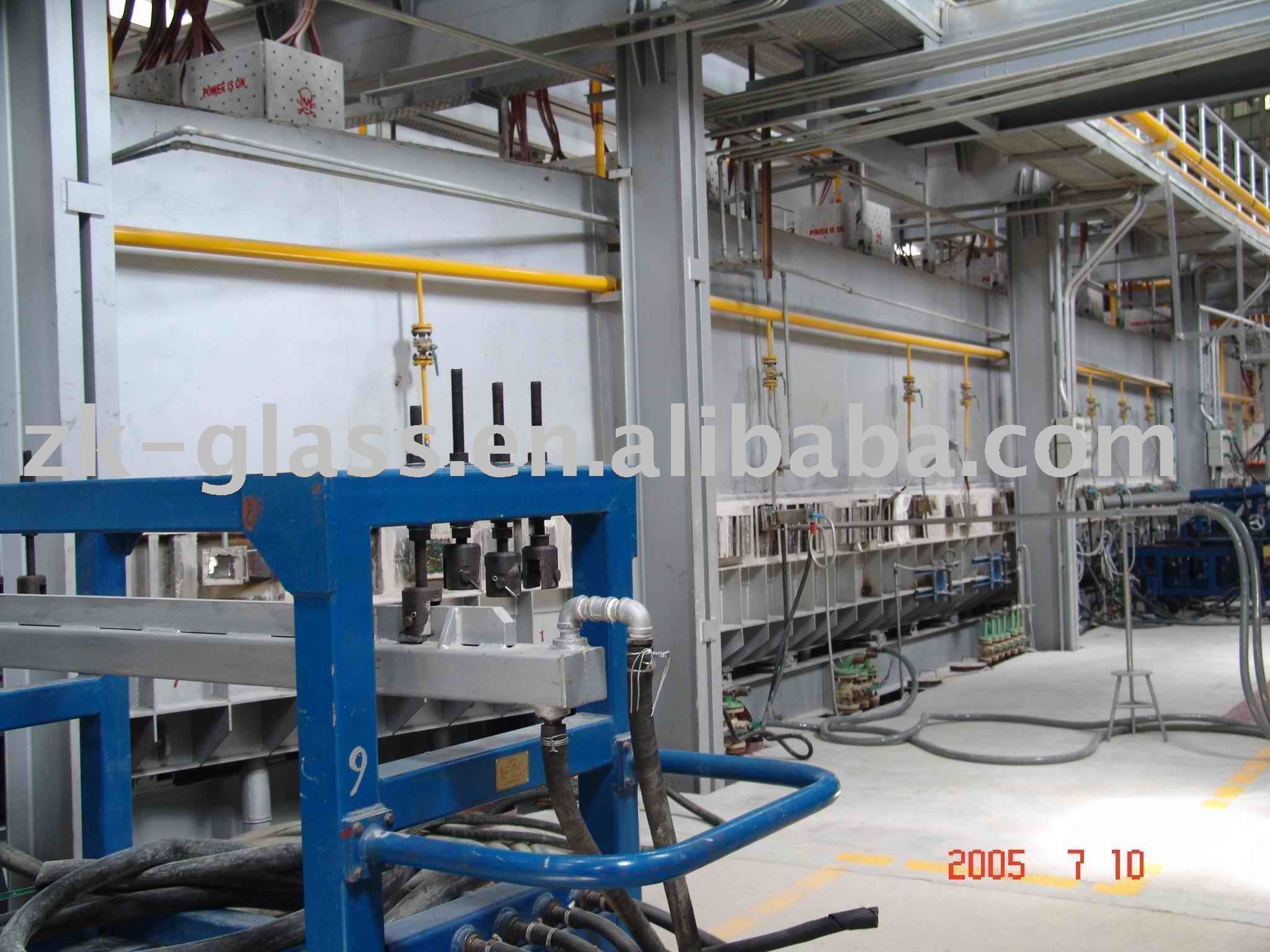
3. Linear speed of collet:10~1500m/h
4. Front and rear adjustable travel path:3000mm
5. Collet horizontal swing angle:±19°
6. Emergency lifting-up height:90mm
7. Top roller rod movement, up & down and horizontal:100mm
8. Collet diameter run-out:<0.2mm
9. Specifications subject to the customers’ requirement
Two Types of Top Roller:
Console Type
Basic motions:
Each top roller has five movements that can be separately operated and controled.
Main Function and Feature:
Fully automatic top-roller is used as
the special main equipment in forming section of the float
glass production line. The fully automatic suspended and console
type top-roller developed and designed by Tucheng is by means
of simple and practical structure in machinery and its application.
Compared with other top rollers in both domestic and overseas
countries, Tucheng’s top-roller has features of miniature,
light weight and high precise. Its electrical design is by
means of fully servo control. The characteristics are as follows.
Adjustments of the Insert depth, swing angle, press depth,
horizontal height are all controlled by imported absolute
encoder servo motor with an accurate positioning and stable
running.
The collet rotating speed is regulated with the servo motor with speed precision as high as 1/10000 (0.0001), speed adjustment is smooth, and wide range.
Collet rotation is by means of imported high precision gear speed reducer which gives low noise and long service life.
Traveling track is used imported straight live sliding block structure, it run smoothly.
The supporting frame is of box structure with elegant appearance and easy maintenance.
The flat corrugated pipe is used with sliding block mounted on both top and bottom, with tight seal and no stuck.
The corrugated pipe is equipped with a camera of micro pinhole. When adjust the top-roller, the camera always moves following the movement of top-roller. The fully automatic is thus realized. Besides, it is not necessary to wipe the camera lens.
As for the software design, a comprehensive calculation is done for several freedom of motion with the top roller so as to avoid the top roller rod gets stuck to the tin bath side sealing causing a severe problem of unexpected event.
Top-roller is equipped with a manual operating button, data screen of high brightness, all data at site and in control room can be sheared together.
If there is power off or electricity failure, all freedom of motion of the top roller is equipped with hand regulating wheel. And there is a indicator installed on the hand wheel, so all manual and automatic parameters such as insert depth, press depth, swing angle can be displayed at work site and in computer of center control room.
A miniature type of UPS can be installed by the Buyer (optional). In case there is power off without UPS, the collet of top-roller automatically lifts up and gives warning or alarm (It not necessary to connect to the supply of compressed air separately).
The electrical control system is easy and convenient to use. Only one group of three-phase power supply and two pieces of communication wire can realize connection of all top-rollers with computer of central control room.
The network is by means of Effluvium net. It is easy to connect with other computers realizing joint shear of all the data.
Operating screen is simply and easy understand, parameter of each top-roller can be dependently designed and dependently operated, also can be separately designed and operate at same time.
The manual operating program of the current thickness change can be recorded when change the thickness of the glass (such as in what time, how many speed changed, how many depth changed and so on), after when change the thickness of glass ribbon, in same condition, can adjust automatically, can finish the program when problems happened with the program.
This system includes control screen and date transfer of main drive of the annealing lehr and the tweel adjustment, it is convenient for changing glass ribbon.
The electrical components for top rollers are all imported.
The surfaces of all the components or parts of the top-roller are by means of spray-plastic with elegant appearance.
Comparing with top-rollers from other manufacturers, while the inserted depth is remained the same, it is miniature and lightweight and very convenient to assembly.
There is software protection and light warning when there is stoppage or malfunctions with the top roller or over high temperature.
-
Technical Specification
There are two types of top-roller
--- Suspended top-roller
--- Console top-roller
Basic motions:
Each top-roller has five movements that can be separately operated and controlled.
--- Collet Rotation
Collet rotation relies upon the output shaft of serve motor speed reducer and the rod is driven by the synchronous tooth belt. Linear speed, which calculated according to the diameter of the collet, can be adjusted.Arrange of linear speed of head: 10~1500m/h
Collet torque: 450NM
Speed of serve motor: 0-2000Rr/min
Speed precision: ±0.01%
---Lift up and drop drown
The top-roller moves vertically ensuring that the rod of top-roller is horizontal with the tin bath surface. Adjustable vertical distance allowed is 100mm.
Max. speed: Vmax=45mm/min
This movement is driven by two leaning thread arm. Precision: ±0.1mm
Panasonic serve motor: 400w
--- Press depth
Position of the collet is adjusted with the inclination of the rod of top roller. Motion of press-down is driven by ladder-shaped threading arm. Angle of arm of top-roller with level of tin surface in adjusted within –2o~2o. Vertical distance for movement of the collet of top-roller is 100mm. Press speed in the position of collet: Vmax.=230mm/min
Panasonic servo motor: 400W
Precision: more than 0.1mm
--- Insert depth
It is inert movement of head into tin bath. It can be moved out, when necessary.
It is driven by the biting of tooth wheel and rack with precise transmission. Range of forward and back movement: ±3000mm; Range of movement on the surface of tin metal: 2000mm.
Movement speed: Vmax=2000mm/min
Precision: ±1mm
Panasonic servo motor: 400W
--- Swing
Swinging of top-roller rotates on the fix point near tin bath, so top-roller can press the glass ribbon at positive and negative angle. Console top-roller is drive by chains, and suspended top roller is drive by gear wheel and rack. Arrange of angle:-19o~ +19o(angle of center vertical line of tin bath and middle line of equipment).Adjustment speed of angle of console top-roller is V=2000mm/min, i.e.1oper 2 seconds, for suspended : V max=1845mm/min, i.e.1o per 2 seconds.
For console top-roller:
Three-phase motor: 100w
Encoder control
Precision: ±0.1o
For suspended:
Panasonic serve motor: 400w
Precision: ±0.1o
Sizes of the top-roller:
--- Weight: console top-roller: 800kg
Suspended top-roller: 850kg
--- Length: console top-roller: 4.4m
Suspended top-roller: 4.8m
--- Width: console top-roller: 500mm
Suspended top-roller: 350mm
ادامه مطلب
Nitrogen / Hydrogen Atmosphere Recycling System For Tin Baths In Float Glass Plants
What is it?
The recycling system is a further development toward tin bath atmosphere quality improvement. Instead of venting the atmosphere outside the tin bath, the mixture of Nitrogen/Hydrogen is pumped out continuously, purified to fresh N2/H2 specifications and re-injected back into the tin bath.
The tin bath atmosphere is extracted at several points on both sides of the tin bath casing. As the tin bath atmosphere is hot, the gas is cooled down for further processing via heat exchangers.
Then the cooled gas passes through a first filtering assembly where the main particles are trapped before being pumped and discharged to H2S removal columns.
After having passed through the H2S removal columns, the gas is filtered again and then fed to the Oxygen purifier device where oxygen content is removed from the gas.
The water particles and vapor are removed via a chemical dryer. The purified gas is then cooled down, filtered and re-injected into the tin bath atmosphere.

Facts about tin bath atmosphere recycling
We
have conducted an evaluation of more than 20 float lines in operation
with and without recycling system to determine the influence of the
recycling system.
Below are summarized the main conclusions:
- A recycling system allows to recycle up to 50% of the total fresh atmosphere injected in the tin bath (N2 + H2). Up to 70% of the atmosphere can be recycled in some cases. This means that if a total 2000 Nm3/h N2 + H2 is injected in the atmosphere, with a recycling system only 1000 Nm3/h are needed as fresh supply and the other 1000Nm3/h are recycled for a constant turnover ratio.
- The H2 is recycled as well. If the N2 contains for example 7% H2 at the recycling inlet, the output recycled N2 will have minimum 6.5%H2 with 0,5% being losses in the deoxo to reduce the O2 ppm.
- All tin defects included as a percentage of total defects in glass were from 9,5% to 15% in float lines without recycling as compared with less than 0,5% in lines with a recycling system.
- Tin baths without a recycling system add each year 4 to 5% of the total amount of tin to compensate for tin losses, dross and evaporation as compared to less than 1,5% with tin baths equipped with a recycling system. The dross is reduced significantly with a recycling system.
- Drips, micro drips, top specks are reduced to virtually zero in tin baths with recycling systems. This compared to 40 to 90drips in average for 10m2 of glass in tin baths without recycling system.
- Tin baths with a recycling system work with pressures less than 20 Pa as compared to higher pressures in other tin baths.
- The N2 turnover in a tin bath with recycling can be increased 2 to 3 times more than in other baths (N2 turn over means how many times per hour is the N2 inside the tin bath completely replaced with fresh N2. Good practice recommends minimum 3 to 5 times per hour total N2 turnover).
- The bigger N2 turnover has a great effect on glass quality and can only be achieved with a recycling or extraction of N2 without significantly increasing the amount of fresh supply.
- Tin baths with a recycling system have decreased the concentration of H2 in nitrogen from 8 to 9% down to 4 to 5%. As a result they use two times less H2 and recycle up to 50% of the injected H2.
- Tin bath roof and cooling equipment is cleaned up to 30 times a year in tin baths without recycling. This compares to less than 6 times a year in tin baths with recycling.
- Cooling capacity in the float bath is reduced by approximately 20% ( less flat coolers are used)
- The recycling can be installed or retrofitted any time during production without generating production losses or deteriorating glass quality. It is typically done during a change of thickness or color.
- The recycling is a must for tin baths with intra float beams used for CVD (Chemical Vapor Deposition) inside the tin bath.
Space requirements
See
the sketch below with the dimensions and space requirements. All
dimensions are in mm. Minimum height required under the tin bath is
3000mm. Other heights can be accommodated, to be discussed.

How much will you save ?
Savings in N2 fresh supply
In normal production depending on the float line capacity, an average
of 1500 to 2000 Nm3/h of pure N2 is supplied to the tin bath roof.
With a recycling system, at least 50% of this flow is recycled back in
to the tin bath reducing the fresh supply in half. (this does not take
into account production savings due to minimum tin bath roof blow off,
five to ten times less frequent cleaning of the equipment around the
tin bath etc.)
Savings in H2 fresh supply
In normal production depending on the float line 150 to 200 Nm3/h of H2
is supplied to the tin bath roof. With a recycling system this will be
reduced by at least 30 to 50%.
Production savings due to improved quality
Production loss due to tin bath defaults is specific to each plant and
it is not possible to quantify without plant specific information.
The chart below shows the impact of a recycling installation on tin bath drips in an actual plant in France:

How much it costs?
The
recycling system is tailored to each float glass plant and the cost
will be dependent on many parameters that are inherent to each plant.
Our specialist will be glad to make a detailed quotation for each
specific case.
Depending on the budgetary constraints, plant size, lay out and configuration of each particular plant, there are several alternatives, however the most common are:
- Option 1: Turn key installation. The budgetary cost will be 2 to 2.5million USD
- Option 2: Supply of equipment only. The plant makes all utilities (civil works, electrical, piping, etc.) interconnections on site itself under the supervision of our engineers. The budgetary cost will be 1.5 to 2 million USD.
- Option 3: We install the recycling system at our own cost. The plant pays for the amount of recycled gas supplied into the float bath by the recycling system and for utilities cost.
The price of recycled gas will be the same as the price paid for the fresh supply.
This is the most optimum solution as the recycled gas is equal to the amount of reduced fresh supply which the plant won’t have to pay to the supplier of N2/H2.
Basically it costs nothing to the plant, but it brings tremendous advantages in quality improvement and tin bath operation. In order to qualify for this option, the amount of recycled gas must be greater than 700Nm3/h. (fresh supply of 1200Nm3/h or greater)
Utilities and consumptions
Following would be the required utilities consumptions for a standard recycling equipment
Total electrical power :
| 1. Supply | : | 400 volts, 50 / 60 cycles | |
| 2. Installed Electrical Load | : | 300 kW | |
| 3. Electrical Consumption | : | 150 kW/h | |
| 4. 3 - phase power cable from your mains to our electrical cabinets | |||
Chilled Cooling water for Deoxo:
| 1. Supply Temperature | : | 12°C | |
| 2. Supply Pressure | : | 2 to 5 bars | |
| 3. Flow Rate | : | 20 m3/hr | |
| 4. Pipe Size | : | ND80, Flanged | |
| 5. Cooling Water Outlet T°C | : | 10°C temperature rise |
Chilled Cooling water for blower:
| 1. Supply Temperature | : | 12°C | |
| 2. Supply Pressure | : | 2 to 5 bars | |
| 3. Flow Rate | : | 5 m3/hr | |
| 4. Pipe Size | : | ND50, Flanged | |
| 5. Cooling Water Outlet T°C | : | 10°C temperature rise |
Cooling water for condensers
| 1. Supply Temperature | : | 30°C | |
| 2. Supply Pressure | : | 2 to 5 bars | |
| 3. Flow Rate | : | 200 M3/hr | |
| 4. Pipe Size | : | 2 x ND150, Flanged | |
| 5. Cooling Water Outlet T°C | : | Max 3°C Temperature rise | |
| 6. Cooling water return pressure | : | 0.8 bar lower than in inlet supply pressure. |
Total instrument air:
| 1. Flow | : | 3 Nm3/hr | |
| 2. Quality | : | Dry & Oil free, from plant instrument air network | |
| 3. Pressure | : | Approx 5 to 6 bars | |
| 4. Pipe connection | : | ND 20 |
Total instrument N2:
| 1. Flow | : | 1 Nm3/hr | |
| 2. Quality | : | From float bath instrument N2 | |
| 3. Pressure | : | Approx 3 to 6 bar | |
| 4. Pipe connection | : | ND 15 |
Some Pictures of a Typical Recycling Installation
Below are some pictures from most recent installation of a complete recycling for a capacity of 1300Nm3/h.


ادامه مطلب
1- مکانیسم توئیل |
8. فنس ها حول دهنده هاو...مربوط به حمام قلع |
||
| 2. سیستم اسپات | |||
| 3. کیسینگ مربوط به حمام قلع |
10.جعبه دی دراس |
||
|
4. سقف کیسینگ حمام قلع |
11.ونت حمام قلع |
||
| 5-فریم استیل حمام قلع |
12.دراس باکس |
||
|
6. درزبندی داخلی حمام قلع |
13.مکانیسم پرده اویز انتهای حمام قلع |
||
|
7. خروجی حمام قلع |
14.محل نگه داری قلع مذاب |
||
|
Equipment under construction: |
|||
 |
 |
 |
 |
| Tweel |
Dedrossing |
Dross Box |
Hood &Curtain |
| (for Saint-gobain) | (for Saint-gobain) | (for Saint-gobain) | (for Saint-gobain) |
 |
 |
 |
 |
.: Weblog Themes By Pichak :.