1.physical رسوب بخار (PVD)
2.chemical رسوب بخار (CVD).
فرایندهای PVD شامل چندین گزینه، کندوپاش بیشتر به طور گسترده ای برای شیشه ای استفاده می شود. Sputtered پوشش به طور کلی به عنوان پوشش شدهي نرم نامیده می شود. پوشش پیرولیتی داده شده با استفاده از روش CVD و اغلب به عنوان پوشش دادهي سخت ناميده شده است. هر دو نوع از پوشش ارائه مزایای و معایب خود را دارند.
مزایای استفاده از CVD عبارتند از: نرخ رسوب بالا و درجه بالایی از کنترل است. تنظیم این فرآیند است تنها یک ماده از دستکاری جریان بخار در منطقه پوشش. و چون پوشش به سطح شیشه ای پیوند می خورند، در نتیجه یک پوشش شیشه ای با دوام بی نظیر است.
بسته به نوع محصول نهایی مورد نظر، یک یا چند پوشش می توان استفاده. پوشش را می توان در داخل حمام قلع، اعمال شده در ورود lehr یا هر دو.
http://www.4shared.com/video/PrQCSBzI/ADS_PVD_Video.html
http://www.4shared.com/video/f6xT-K92/video1.html
http://www.4shared.com/video/RM-bjKIP/video2.html
http://www.4shared.com/video/qi6awcYm/video3.html
http://www.4shared.com/video/iL5gCDt-/video4.html
http://www.4shared.com/video/btFfF8cV/video5.html
برچسبها: pvdفيلم, شيشه وسطوح ديگر

برچسبها: اسپاترينگ پيشرفته تكنولوژي پوشش دهي شيشه فلوت
ادامه مطلب


برچسبها: ماشین آلات مربوط به خط شیشه بطر, جارو, شامل IS, کوتینگ و
ادامه مطلب

Heat-reflective coated glass, also named solar control coated glass. The Solar control glasses of Xiamen Dexing Glass are from Saint-gobain, it is manufactured through coating several layers of metal oxides on high quality SGG transparent float glasses or tint glasses by the means of vacuum magnetism control and cathodic sputtering, the technological process and coating materials assures the firmness and wear resistance of films. Which can be controlled effectively through the visible light and near infrared, and generates the reflective color as requested. Coated glass which has the following features:
1. Effectively restricting the input to direct solar radiation, the distinct shading effect.
2. Colorful hues and excellent reflection of decorative effects.
3. Objects and architectural elements to the interior of overshadowing good sight.
4. The desirable visible light through and reflectance, weakening the UV rays through.
5. Which can effectively control the building heat loss, with energy-saving rate of 50% -60% .
 |
 |
Sunshine energy diagram 6mm withe glass |
Sunshine energy diagram tmm ST136 solar control film |
Along with the continuous development of architectural aesthetics and and the increasing demands of glasses for construction use, it requires the appropriate functional ambient lighting and good sight overhead lighting effects, it also demands a certain energy and the colorful splendor of the decorative effects. Colored glass or transparent glass ordinary obviously unable to meet these requirements.

برچسبها: پوشش سولار
|
|
|
||||||||||||||||||
|
|
|
||||||||||||||||||
|
|
|
||||||||||||||||||


ادامه مطلب
agnetron sputter coating technology
 Historically,
there have been two ways to apply coatings to glass. During the
pyrolitic (on-line) process, the coating is applied during float glass
production. The off-line process occurs after the glass has been
produced, using a magnetron sputter vacuum deposition coater. In
general the latter process offers increased coating options and a
broader range of performance options than the pyrolitic process.
Historically,
there have been two ways to apply coatings to glass. During the
pyrolitic (on-line) process, the coating is applied during float glass
production. The off-line process occurs after the glass has been
produced, using a magnetron sputter vacuum deposition coater. In
general the latter process offers increased coating options and a
broader range of performance options than the pyrolitic process.
To produce Advanced Architectural Glass, Guardian uses only Magnetron
Sputter Vacuum Deposition (MSVD). It works at the molecular level to
produce outstanding performance and offers significant advantages over
pyrolitic (hard) and traditional soft coated glass products. Guardian
uses different gases, such as argon, nitrogen or oxygen, which react
with different materials to produce thin metallic and dielectric layers
in different sequences, resulting in a wide range of coatings and
performance characteristics.
Guardian has invested tremendous resources toward continuous
improvement in glass performance in relation to solar heat gain,
u-value and other measures. The result is that the specification and
use of SunGuard Architectural Glass continues to grow in the commercial
construction market. We offer a wide range of products that:
-
can achieve dramatic energy savings,
-
will or exceed local Building Regulations energy requirements,
-
satisfy different aesthetic and design requirements,
-
provide shorter lead times for your projects.

برچسبها: پوشش دهی با دستگاه مگنترون بر روی شیشه فلوت, گاردین روسیه
ادامه مطلب
provides
both of excellent properties: solar control and thermal insulation.
SUN-E glass has characteristics of low exterior reflection and
color-neutral appearance, and it has high thermal insulation and
energy-saving properties required of modern architectural glass and
green building design. SUN-E glass is especially suitable for using in
warm climate and hot climate area.
Product Features
¤In winter,SUN-E glass will reflect the heat back into the room, keep the indoor window temperature comfortable
¤In
summer, SUN-E glass will reduce the amount of reradiated heat entering
into the room and keep cool and comfortable in the room
¤Hard coating
¤Neutral color appearance, visual comfort
¤High solar shading and thermal insulation
¤High durability,coating’s life same as the glass
¤Easy handling & easy processing(cutting,laminating,tempering,screen printing)
¤Can be used as single glazing
¤No special handling for IGU
¤Size:3660mm*2440mm,2440mm*1830mm
ادامه مطلب
| Low-E glass is manufactured by on-line Chemical Vapor Deposition process. The precursor chemicals, mainly tin oxide, are vaporized and inlet on the hot glass surface at a temperature of 600--700℃, then they react and deposit on the glass surface forming the Low-E coating. To restrain the degradation of thermal insulation caused by the alkali metal ion diffusing into the coating layer, and to reduce the color spot on the coating glass surface, one or multiple layers (named the interface layer, barrier layer or color weaken layer ) are deposited between the tin oxide layer and the glass. The double or multiple coatings can achieve the high light transmission, low reflection, high thermal insulation and energy-saving properties required of modern architectural glass and green building design. | |||
 |
| ||
| •Easy handling & easy processing (cutting, laminating, tempering, screen printing) •Can be used as single glazing •No special handling for IGU | |||
| Product Range | |||
| •Thickness is 4mm, 5mm, 6mm, 8mm, 10mm, 12mm •Size: 3660mm × 2440mm, 1830mm ×2440mm •Other sizes are available upon request | |||
| Product Applications | |||
| The LOW-E glass of Kibing has multiple applications in residential and commercial buildings based on its neutral appearance and high light transmission. Due to its excellent thermal insulating properties, the LOW-E glass of Kibing can also be used in the fields such as ovens, refrigerator doors, liquor cabinet, beverage display cabinet, disinfection cabinet and other various commercial display cabinets. | |||
| Discerning | |||
| Please follow the method beneath to discern the LOW-E coating surface from the neutral surface | |||
 | |||
| KIBING LOW-E GLASS PERFORMANCE DATA | |||
 | |||
 | |||
| Remarks | |||
| •All data shown in the tables are test results and not performance guarantees. •For more detailed information,please contact us. | |||
ادامه مطلب
What is a TCO film?
In thin film silicon solar cells,*1 TCO films function as conductors (electrodes) that derive electrical energy from sunlight. These films must meet the following conditions: they must be able to conduct electricity, they must be transparent, and they must be able to efficiently scatter light by means of their surface concavoconvex texture, to conduct more light into the photovoltaic layer for higher power generation efficiency.

Crystal silicon solar cells and thin film silicon solar cells
*1 Thin-film silicon solar cells are made by forming very thin silicon films on glass substrates. These cells use only about one-hundredth the amount of silicon compared with typical crystalline silicon solar cells (solar cells made by processing silicon ingots into wafers). On the other hand, thin-film silicon solar cells have lower power generation efficiency (less than 10%) compared with crystalline silicon cells (approx. 15%) , which is the challenge for thin-film silicon solar cells.
Thin-film silicon type

Features of the AGC Group's technology
The
AGC Group's TCO films have the following characteristics: they are
highly conductive films with low electric resistance and scatter light
very efficiently. We embarked on the development of TCO films in 1985.
Our first product, Type U TCO film became the world's standard for TCO
films, but it scattered only 10% of incoming sunlight (haze rate).
After releasing the Type VU TCO film, which had a better haze rate, on
the market, we unveiled the development of Type HU TCO film, which can
scatter up to 90% of incoming sunlight through our original nano-scale
(one-billionth of a meter) film forming technology. By generating
smaller concavoconvex parts onto the existing concavoconvex surface, we
have made it possible for the film to reflect sunlight in a more
complex manner in order to conduct more light into the photovoltaic
layer for improving the power generation efficiency.
The AGC Group
also possesses a technology to coat TCO films onto float glass
concurrently at the time the glass is produced. We will continue our
development activities to meet the needs of still more customers.
ادامه مطلب
پوششهای مدرن بطور متوسط از پنج لایه تشكیل شده اند و بستر كلی آنها پلیمری میباشد. این فن آوری درحقیقت برپایه عملكرد انتخابی درمورد كل گستره طیف الكترومغناطیسی و نور خورشید استوار است كه اشعه های حرارتی را مهار میكند و نور مرئی را بصورت كنترل شده عبور میدهد. لایه های مختلف با مكانیسم های مخصوص به خود خواص زیر را به شیشه میدهند:
- دفع حرارت نور خورشید تا 81% به واسطه لایه Metallized.Sputtered .
- جلوگیری از اشعه فرابنفش تا 99% بواسطه لایه حاوی گونه های شیمیایی UV Absorbers
- افزایش دفع ضربه در شیشه و جلوگیری از پخش قطعات شكسته بواسطه لایه پلیمری تقویت شده و مكانیسم های ویژه چسبیدن.
- و غیره.
اجرای فن آوری فوق برروی شیشه های رایج در كشور ممكن است، برای نصب آنها نیازی به خروج شیشه از قاب نبوده و با ایجاد كمترین تغییرات در محیط كار همراه است.
خاصیت دفع حرارت قادر است ورود گرما به ساختمان را در شیشه های دوجداره و یك جداره بطور متوسط تا 60% كاهش دهد. همچنین این پوششها دارای انواع كم گسیل (low-e) نیزمیباشند كه اتلاف حرارت در زمستان را تا 29% كاهش میدهد. این دو معیار بطور مستقیم انرژی سرمایش و گرمایش در ساختمان را كاهش میدهند. در مورد پوششها معمولا“ 19 مشخصه اندازه گیری میشود كه تمام خواص حرارتی و نوری را شامل میگردند و خواص فیزیكی ومكانیكی را میتوان به این ویژگیها افزود.
اهم مشخصات بدین شرح میباشد :
1- درصد دفع حرارت خورشید. (Total Solar Energy Rejected TSER)
2- درصد عبور، انعكاس و جذب كل تابش خورشید. (Total Solar Transmittance / Reflectance/ Absorptance)
3- درصد كاهش ورود حرارت نسبت به شیشه عادی : Solar Heat Gain Reduction
4- درصد كاهش اتلاف حرارت نسبت به شیشه عادی Heat Loss Reduction
5- انواع ضرایب انتقال حرارت K Value
انتخاب پوشش مناسب در هر ساختمان تابع پارامترهای متعددی است از جمله :
نوع، رنگ، ضخامت و مساحت شیشه، جنس چارچوب پنجره، اقلیم منطقه، وضعیت ساختمان نسبت به تابش خورشید، نوع سایه ها و ... برآیند این عوامل در جداول دقیق، جواز نصب پوشش در هر مورد را تعیین می نماید. همچنین نهایتا“ بااستفاده از نرم افزارهای مناسب پیش بینی میزان صرفه جوئی در انرژی ساختمان و هزینه ها میسر میباشد.
علاوه بر بهینه سازی مصرف انرژی درساختمان مزایای دیگری نیز برقرار می باشند، به عنوان مثال جلوگیری از ورود اشعه فرابنفش تا میزان 99% باعث میشود، مضرات این تشعشع از جمله رنگ رفتگی لوازم داخل ساختمان، تخریب تدریجی مواد پلاستیكی و پارچه ای و ایجاد حساسیت و امراض و سرطانهای پوستی رفع گردد و عمر مفید تجهیزات ساختمان افزایش یابد. همچنین مكانیسم پیوند این پوششها به شیشه به گونه ایست كه درصورت شكسته شدن شیشه فرو نمی ریزد و امنیت ساكنان ساختمان را تامین می نماید. در این زمینه انواع ویژه ایمنی/ امنیتی و ضد سرقت نیز ارائه شده اند.
كلا“ این فن آوری بیش از صد نوع پوشش را شامل می شود كه به علت پیشرفت سریع فن و تكنولوژی و تازگی، تنوع و حجم اطلاعات در این زمینه اغلب مهندسان و طراحان از كارایی و میزان دقیق صرفه جویی انرژی حاصل از این محصولات آگاه نیستند.
ادامه مطلب
 | Glass cutting Individually configurable and modular expandable solutions for loading, breaking and cutting: the result is a highly economical and flexible glass cutting every time - ideal for large cutting quantities. -> |
 | Arrissing / Grinding The customers define their required shape and quality of the edge - be it trimming precise C-cut - and get the right solution - of course, in Bystronic glass automotive quality. |
 | Sorting Modular configurable sorting solutions to match individual production requirements: Bystronic glass offers static and dynamic sorting systems for buffer operation or the direct connection to a thin-film solar module production line.
|


ادامه مطلب
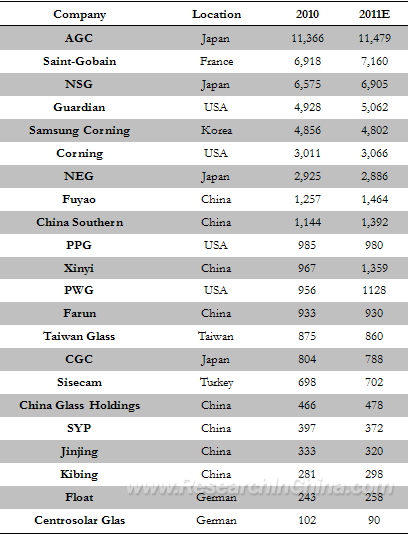
The market size of automotive glass approximates USD15 billion, with around USD13 billion from OE market and USD2 billion from AM market. In OE market, the five titans including AGC, NSG, Fuyao, PGW and Saint-Gobain occupy approximately 85% altogether in the global market, indicating a very high entry threshold.
As for the electronic display glass market, the market size is about USD16.5 billion, of which, large size TFT-LCD substrate registers around USD15.7 billion. As the production of glass substrate requires sophisticated technologies, only four companies, namely, US-based Corning, Japan-based AGC, Nippon Electric Glass and AvanStrate, can make the product. As the world’s largest glass substrate manufacturer jointly invested by Corning and Samsung, Samsung Corning realized revenue of USD4.856 billion in 2010, with the gross margin exceeding 75% as opposed to 5-8% of ordinary flat glass.
Low-E glass and solar glass are among the hottest investment topics at present, but their gross margin is far less than that of large size TFT-LCD substrate.
In Europe and the USA, the utilization rate of low-E glass is extremely high, but very few buildings are erected each year. In contrast, China inputs huge amounts of money to build public and commercial buildings each year, so it is the largest market of low-E glass. In China’s civil architecture field, the penetration rate of low-e glass is very low due to the exorbitant price, and the market size will see no considerable growth in the short run.
European and American enterprises are taking leading roles in low-e glass market. In particular, PPG, Guardian and Saint-Gobain take a lion’s share of the European and American market. However, due to high transportation cost, these enterprises can thrust into the Chinese market only through joint ventures. Thus far, the three have been very conservative about investments and rarely expanded capacities.
The market size of solar (PV) glass is relatively small. Solar glass is mainly classified into two categories: one is anti-reflective glass for silicon solar cell, and the other is TCO glass for thin film solar cell. The solar industry is facing unprecedented winter, witnessing grim price competition that causes sharp decline in gross margin. It is estimated that the market size of TCO glass in 2011 will approximate 57.092 million sq m valuing about USD1.3 billion. Due to very high industry admittance threshold, TCO glass market is largely monopolized by AGC and NSG of Japan.
The nosedive of polycrystalline silicon price has undermined the cost edge of thin film cell. In 2009, the silicon cell was priced at USD2.4/w with the cost around USD2.02/w; the thin film cell was priced at USD1.95/w with the cost around USD1.2/w. Presently, the cost of silicon cell is reduced to below USD1.18/w, while the cost of thin film cell cut down to USD0.92/w. As a result, the cost advantage of thin film cell manufacturers has been weakened significantly. The output of Chinese thin film cell manufacturers is relatively low. The major thin film cell manufacturers worldwide concentrate in the USA, Japan and Germany. Particularly, US-based First Solar occupies an overwhelming share of 50% or so.
ادامه مطلب
| New enrgyانرژی های نو-با پوشش های جدید بر روی شیشه-شیشه های نوین در صنعت شیشه فلوت |
 |
|
 |
|
 |
|
 |
|
ادامه مطلب

TCO for Photovoltaics

TCO coatings for thin film solar cells (a-Si, μc-Si and CdTe)

With the surge of photovoltaics (PV) in the world today, solar cell
manufacturers are looking for more economical coating solutions for
their production lines. Beneq, with its own nAERO®
aerosol-assisted pyrolytic deposition method, presents a technically
superior and economical coating method for in-line and off-line coated
products. nAERO is capable of producing low-haze and high-haze
transparent conductive oxide (TCO) coatings, which allows the cell
manufacturer to optimize the coating to suit his specific needs and
thus maximize the efficiency of the thin film cell.
Higher photon efficiency
A nAERO-produced TCO coating is a pyrolytic hard coating consisting of fluorine-doped tin oxide (SnO2:F). Coating parameters can easily be adjusted and optimized to yield best results for haze, conductivity or transmittance. Haze can be as low as < 1% or as high as 20%, including the range between the two extremes. nAERO TCO by Beneq is fully temperable and can be laser-scribed or wet-etched. In addition, the pyrolytic hard coating has very good adhesion to sealing materials.
Efficient raw material usage
nAERO deposition is based on sub-micron sized droplets that are directed to the glass substrate. This enables a high growth rate and good material economics, with a raw material (precursor) yield of 20% or better.
Underlayer
If needed, an underlayer consisting of SiOx, SiO2 or TiO2 can be added between the electrically active TCO layer and the glass substrate. This underlayer is produced in a process step prior to nAERO coating. The underlayer serves as a barrier layer against sodium diffusion and eliminates iridescence in reflected light.
Coating specifications1
| Type | transparent conductive oxide (TCO) | |
| Chemical composition | SnO2:F (FTO) | |
| Subgroup (based on haze) | low haze | high haze |
| Haze, D65/10% | 1 | 12 (example) |
| Transmittance2, average 400-1000 nm (%) | > 83 | > 83 |
| Sheet resistance3 (Ω/□) | 12 | 10 |
| Emittance | 0.15 | 0.15 |
| Thickness (nm) | 400 | 750 |
| Uniformity, sheet resistance (deviation) | < 2.0 (Ω/□) | |
| Uniformity, transmission (deviation) | < 1% | |
| Temperable | yes | |
1 All properties are nominal and solely applicable to
specimens under specific testing conditions. The information is not
intended to and does not create any warranties.
2 Transmission measured with index matching liquid CH3I (haze compensation) on 4 mm glass.
3 Measured by 4-point method.
More information
Download TCO for Photovoltaics brochure (pdf).
ادامه مطلب